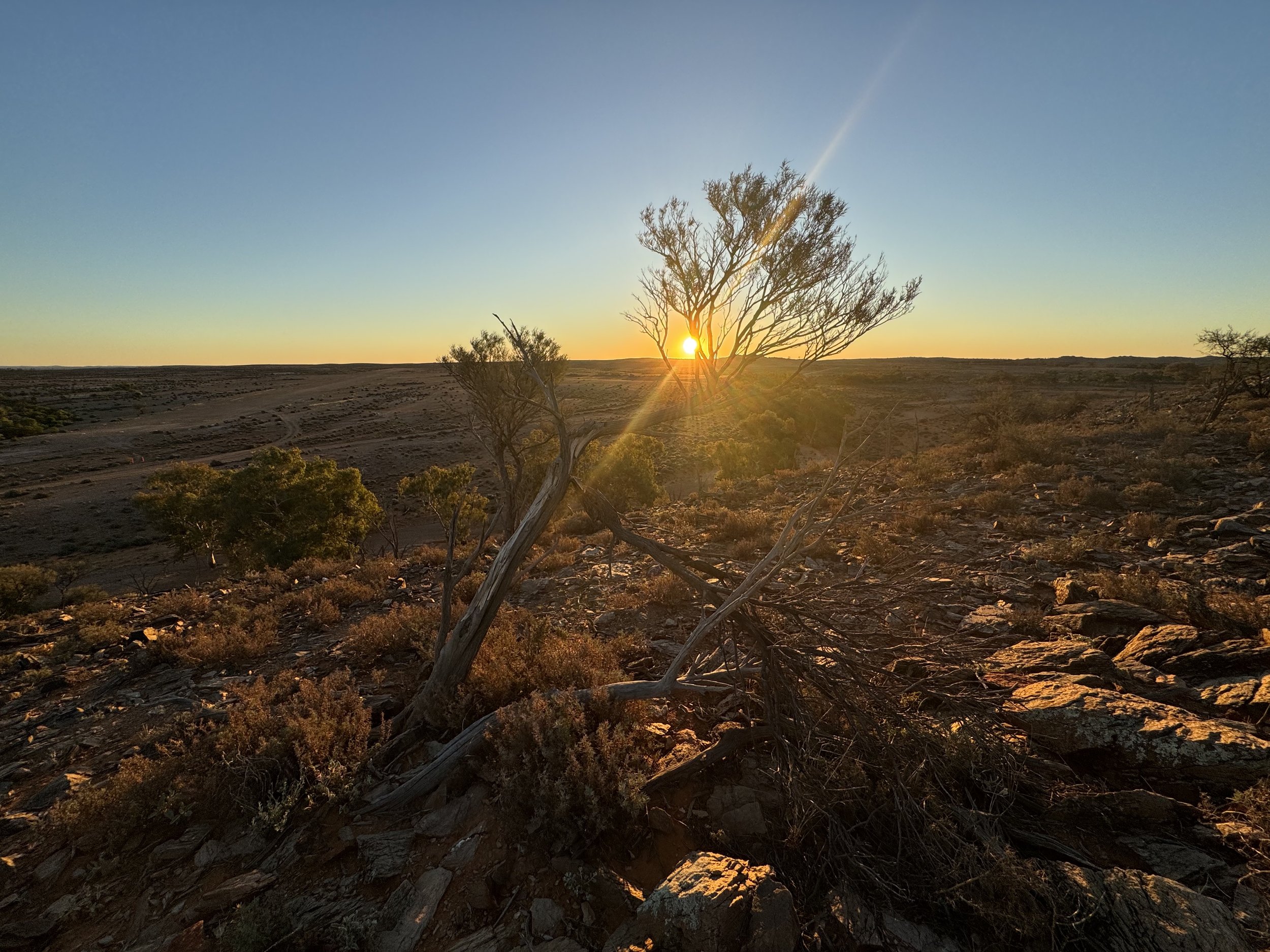


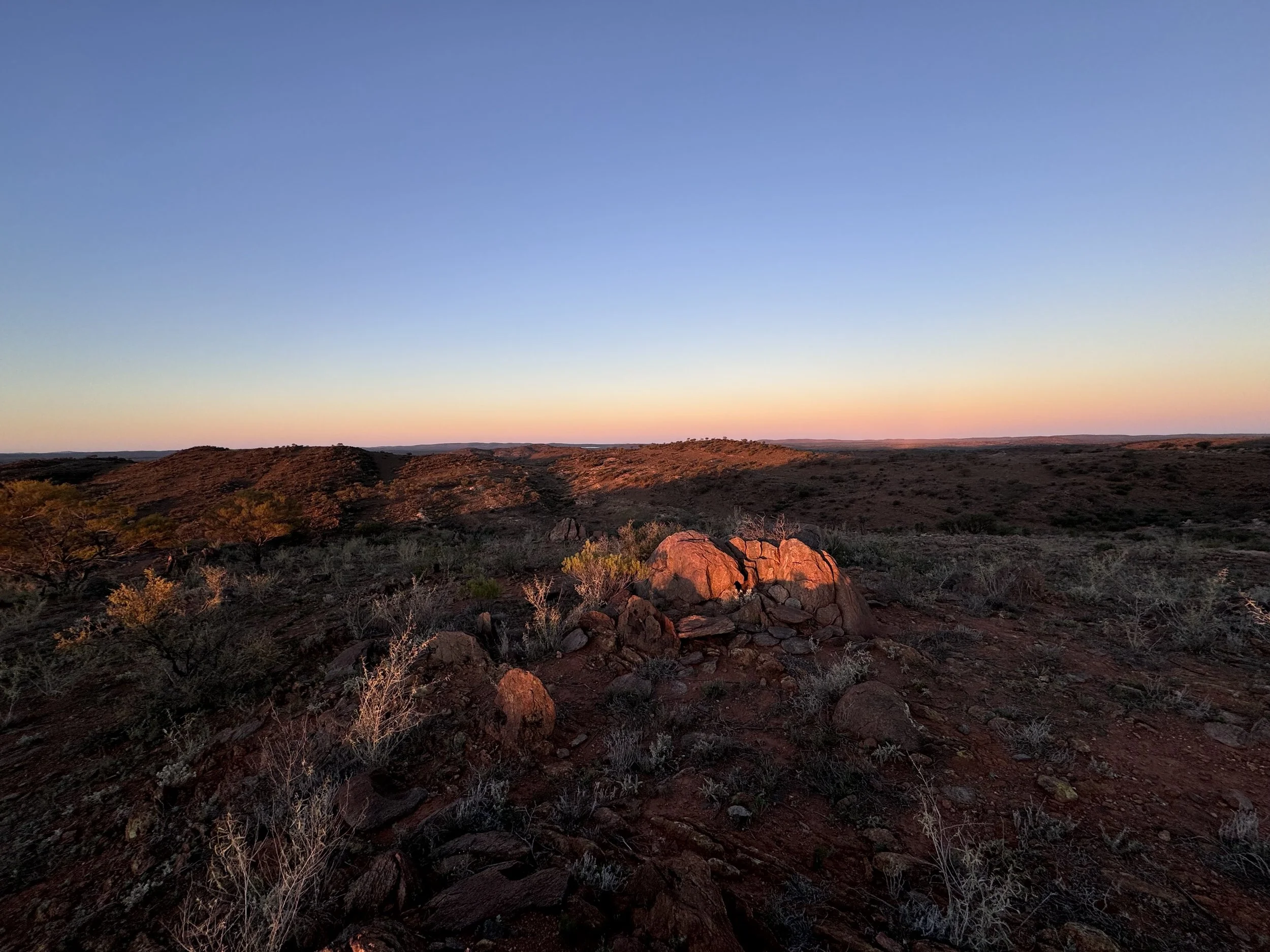
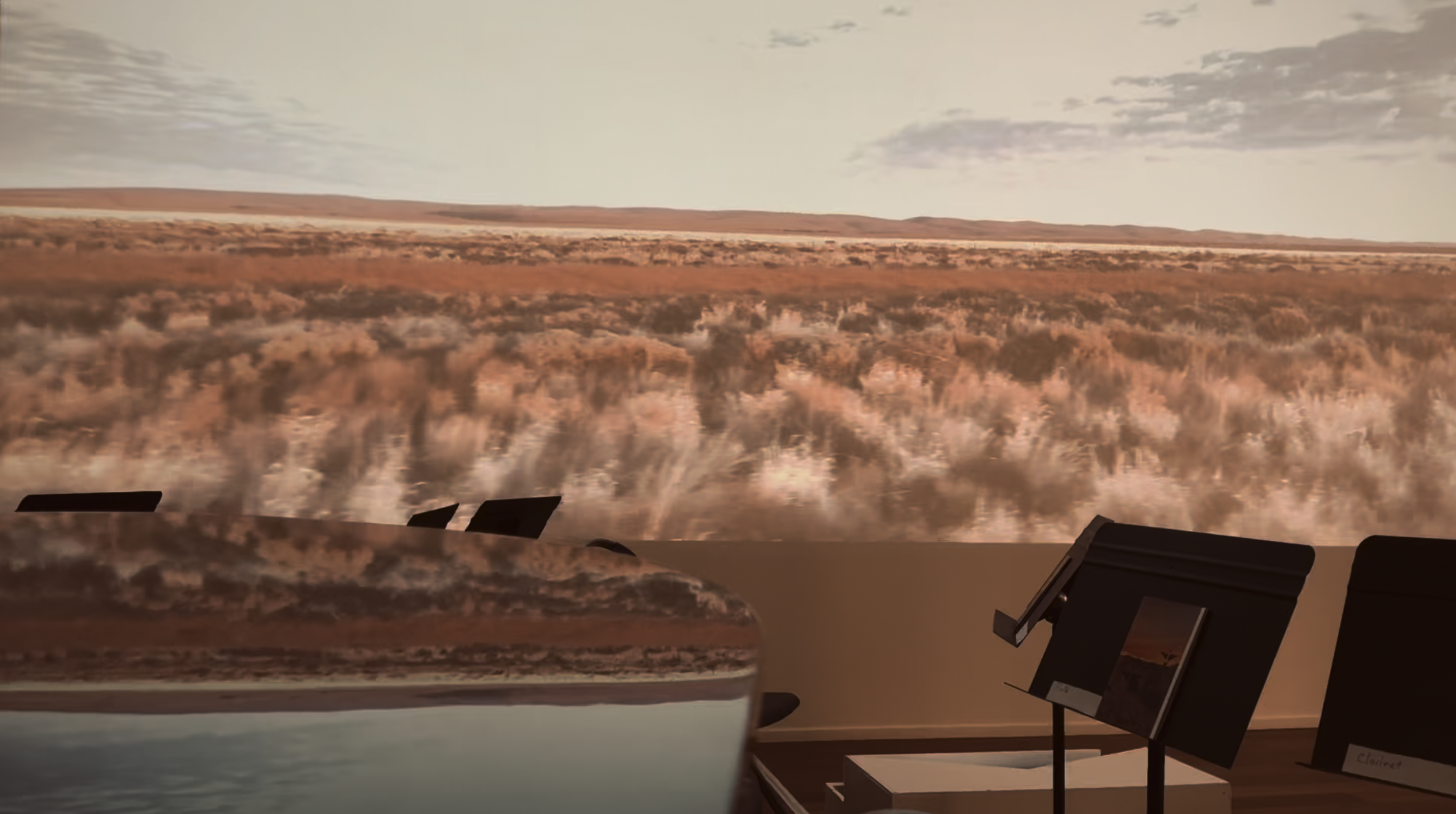

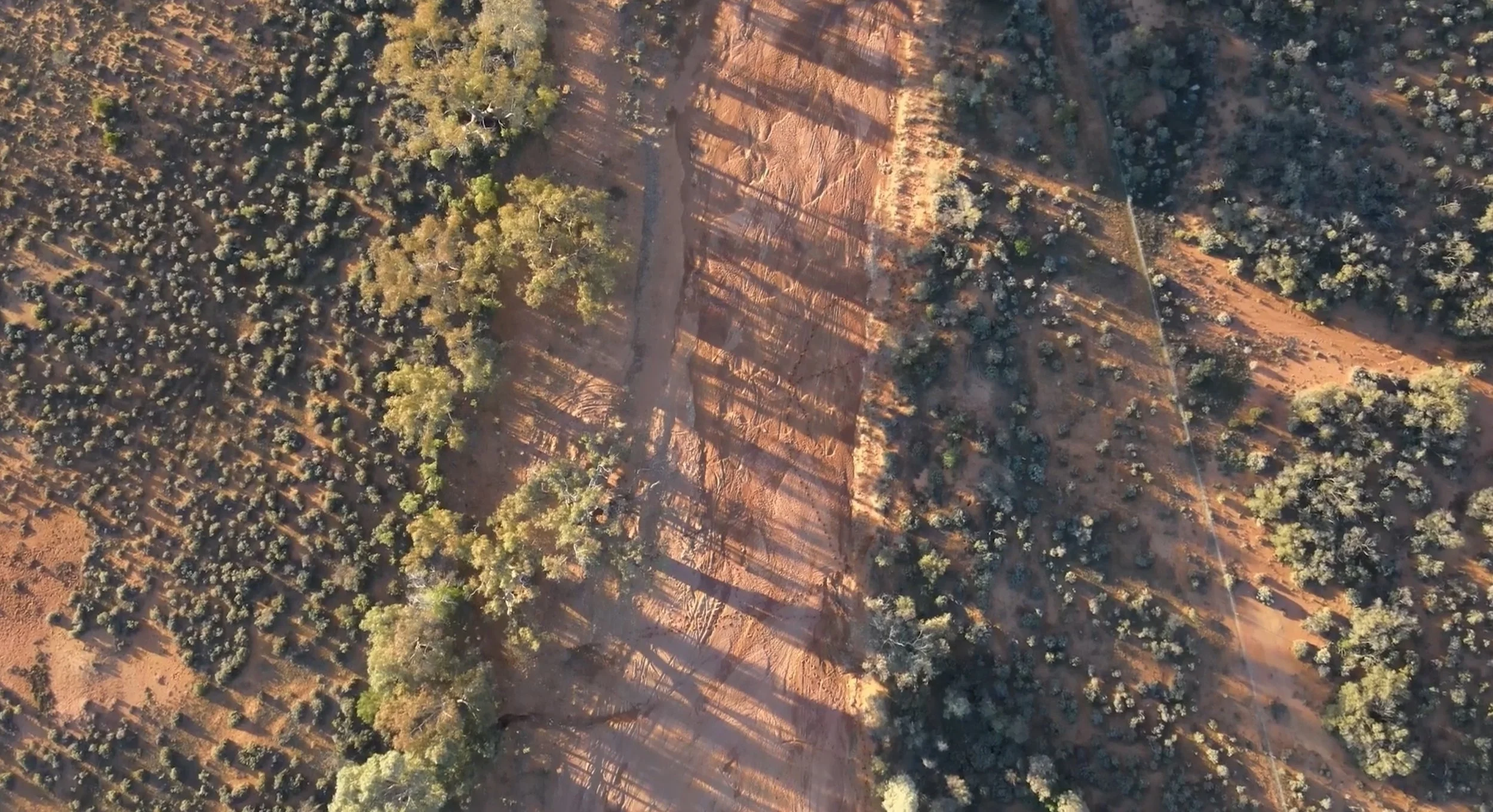



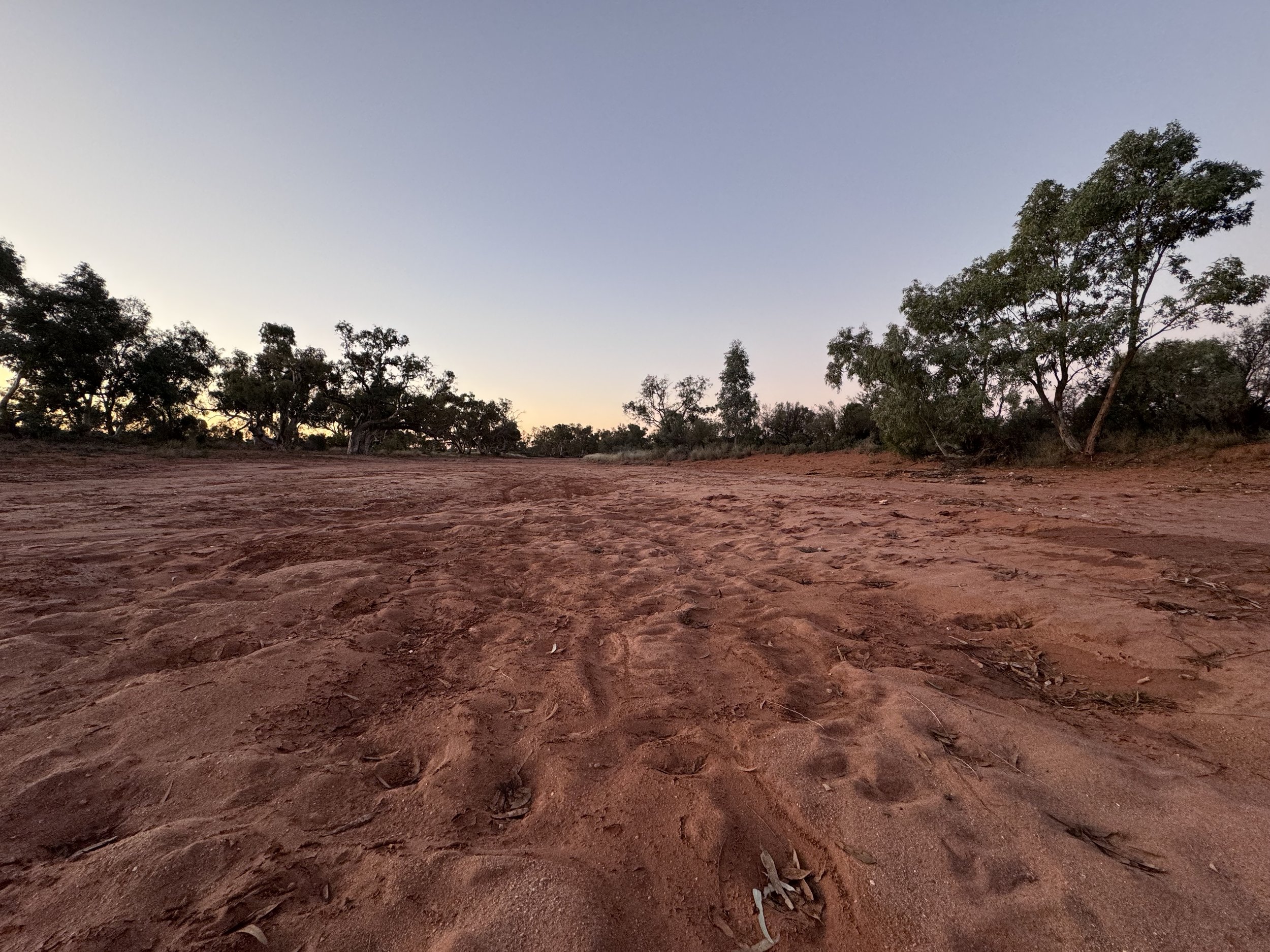

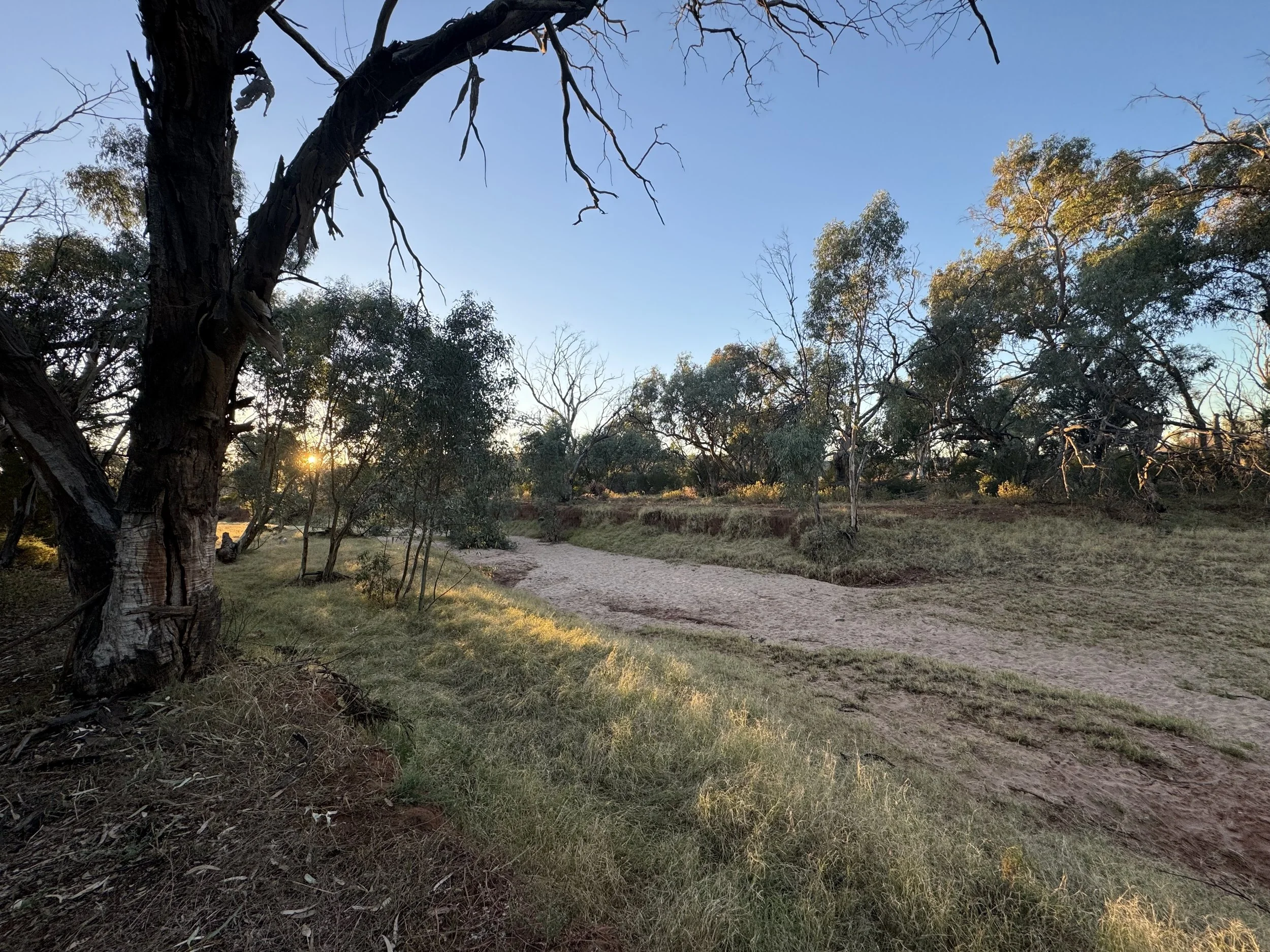

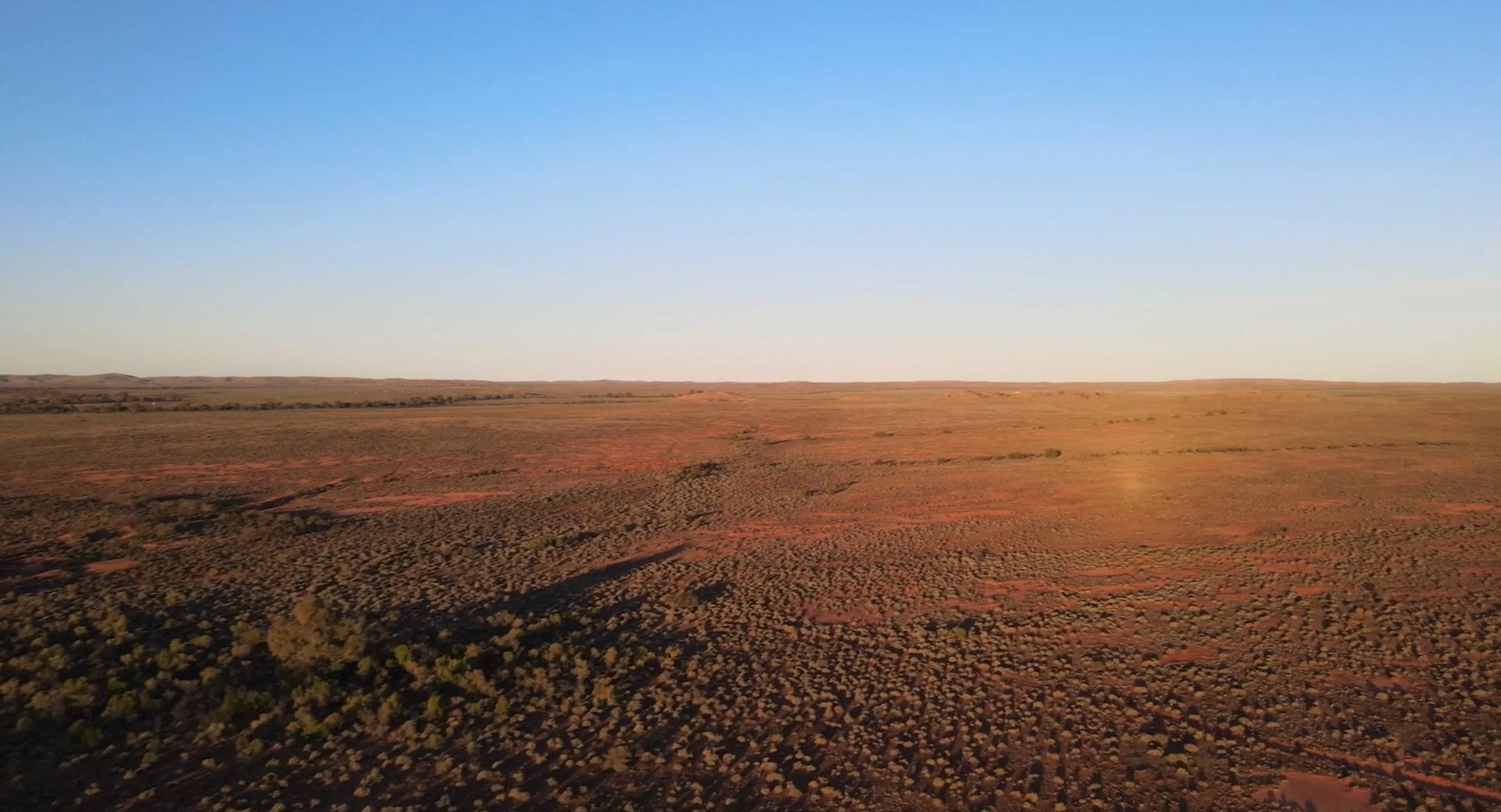
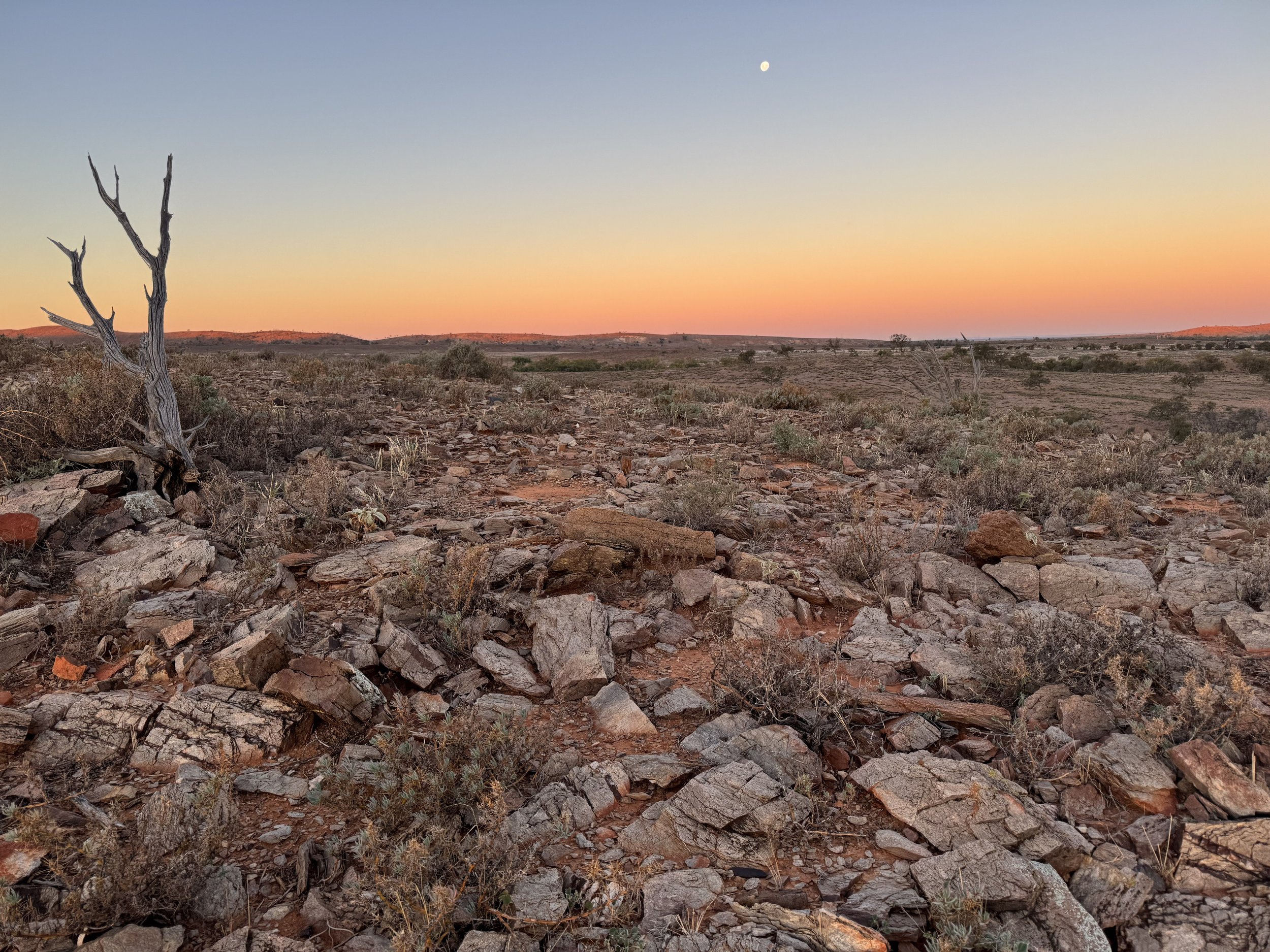


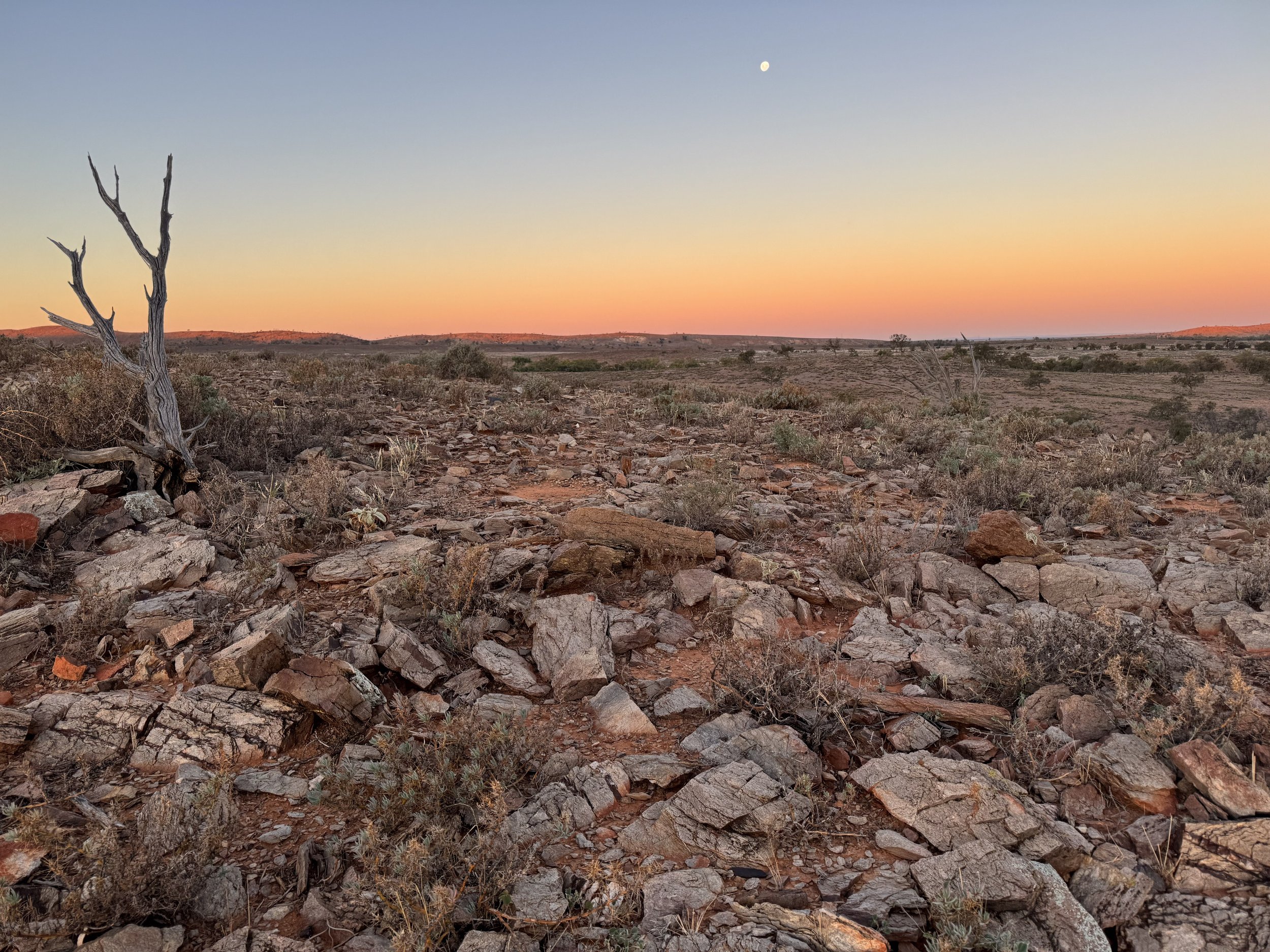
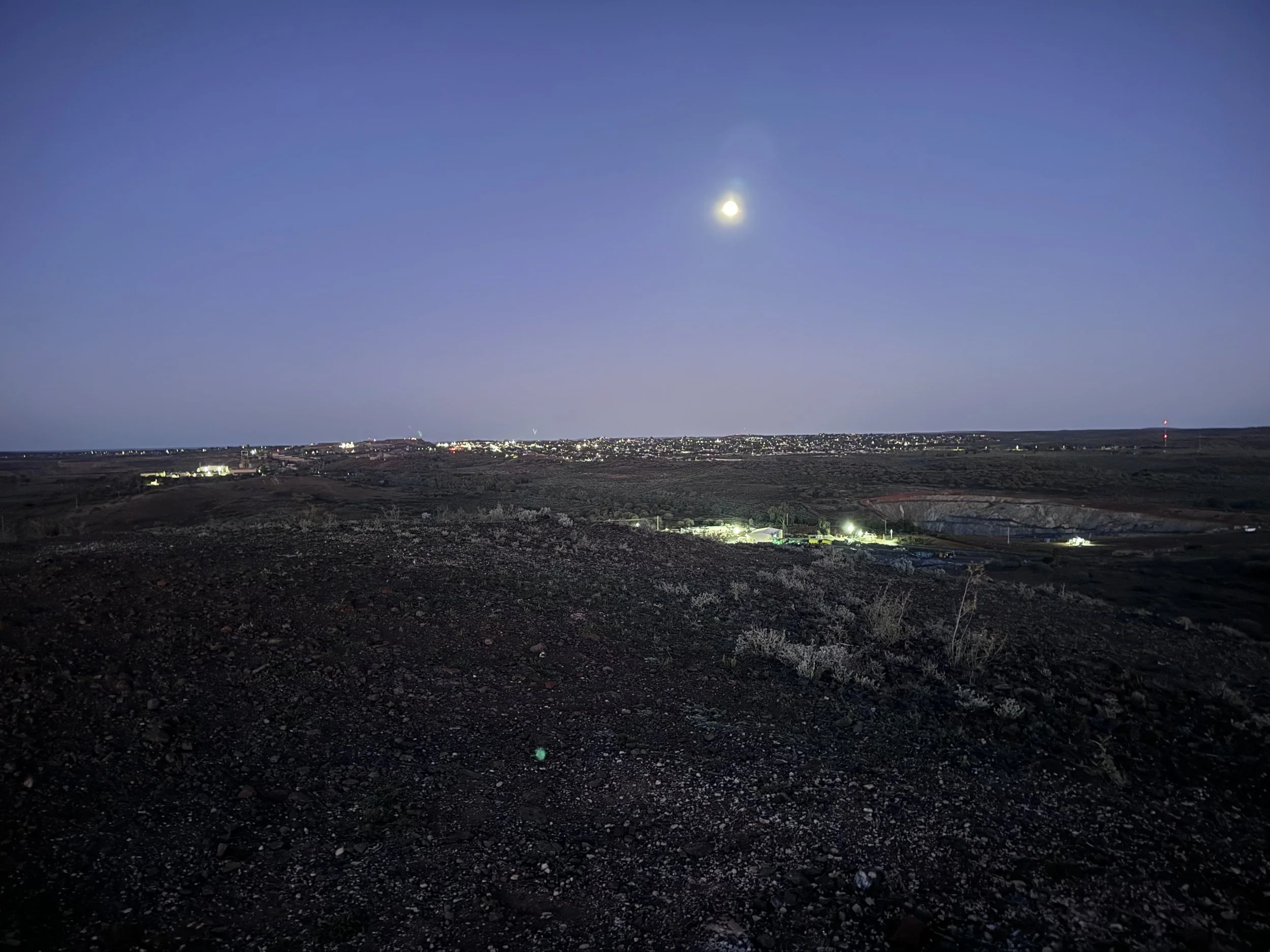
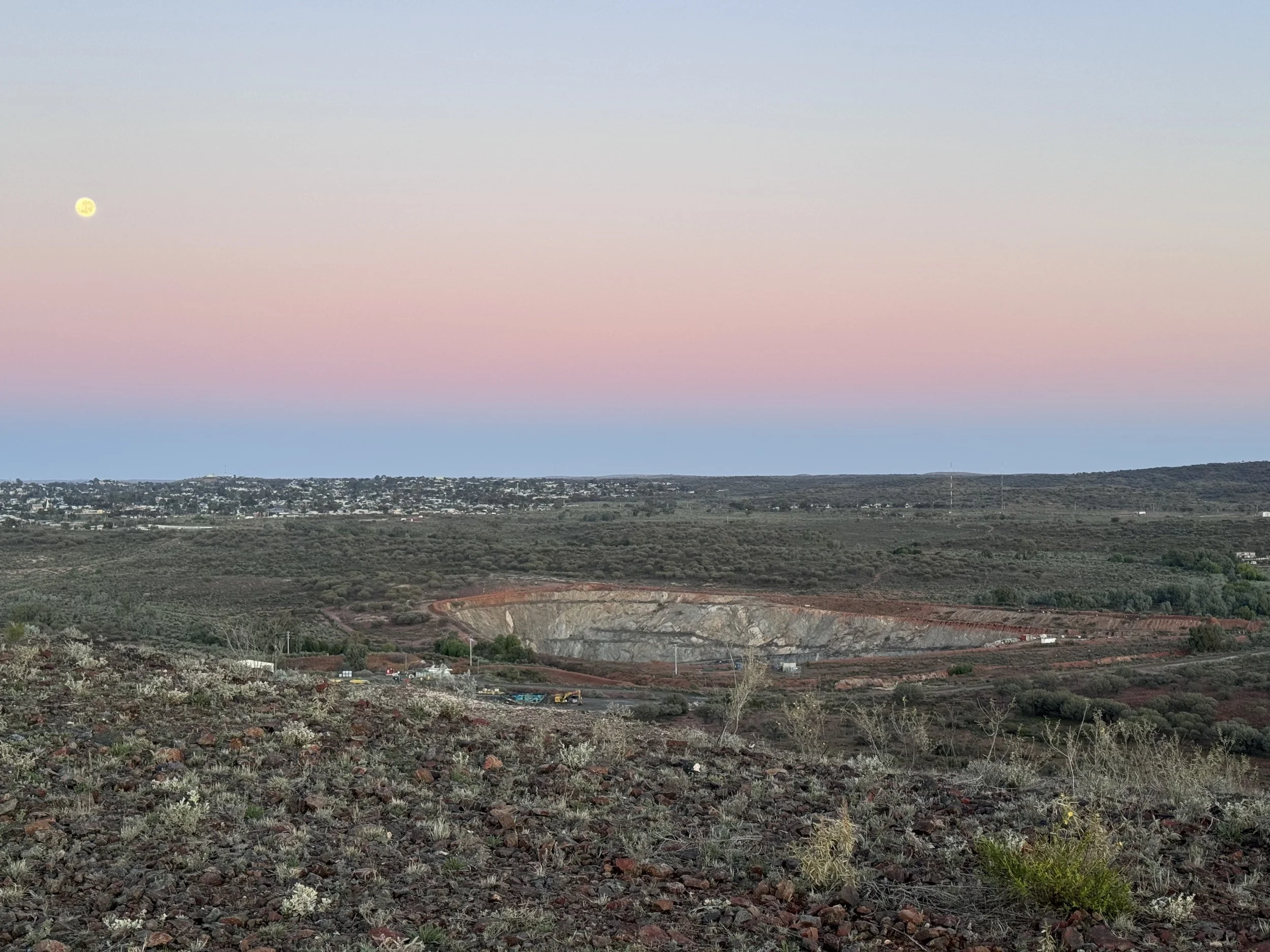


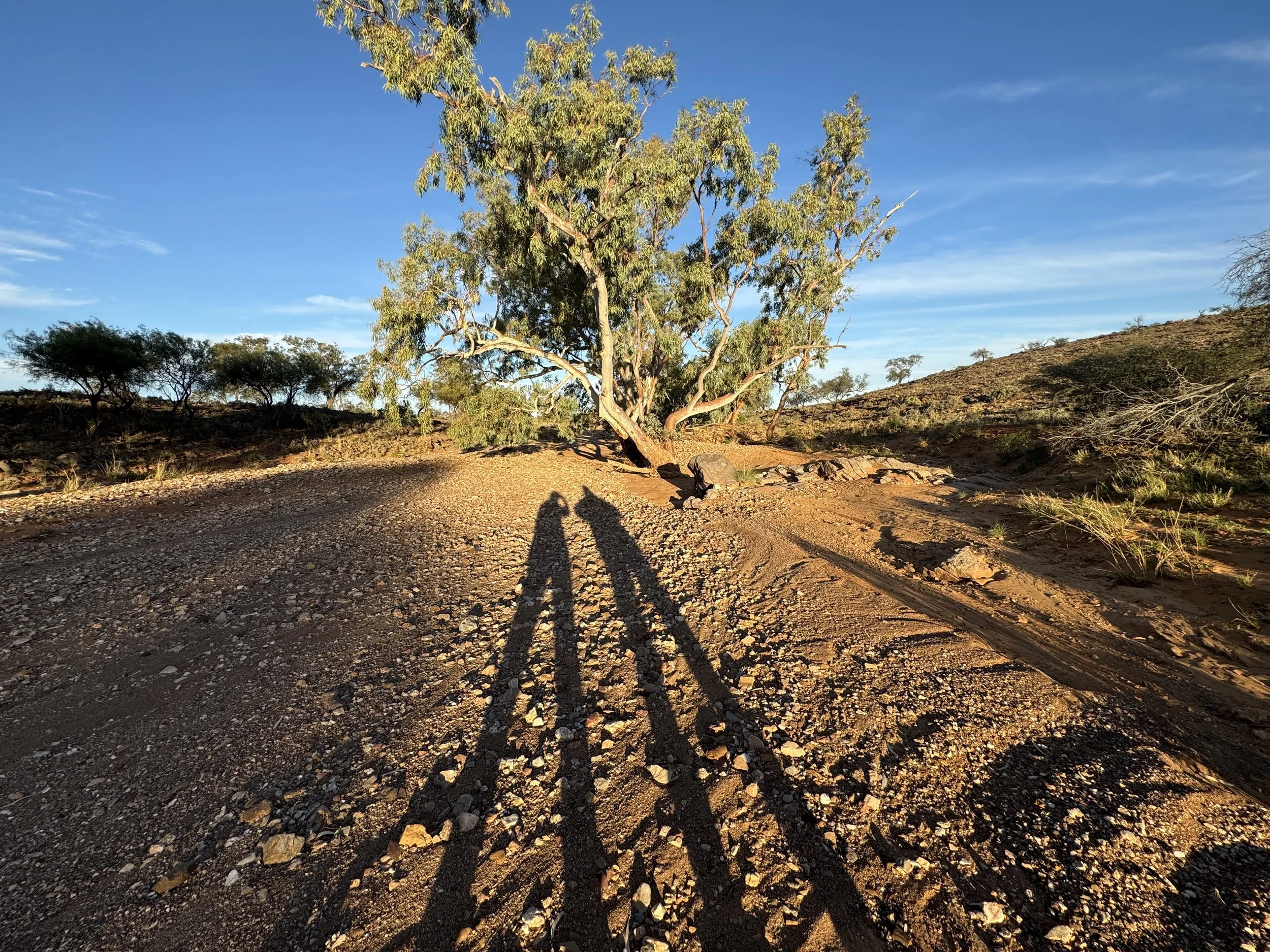
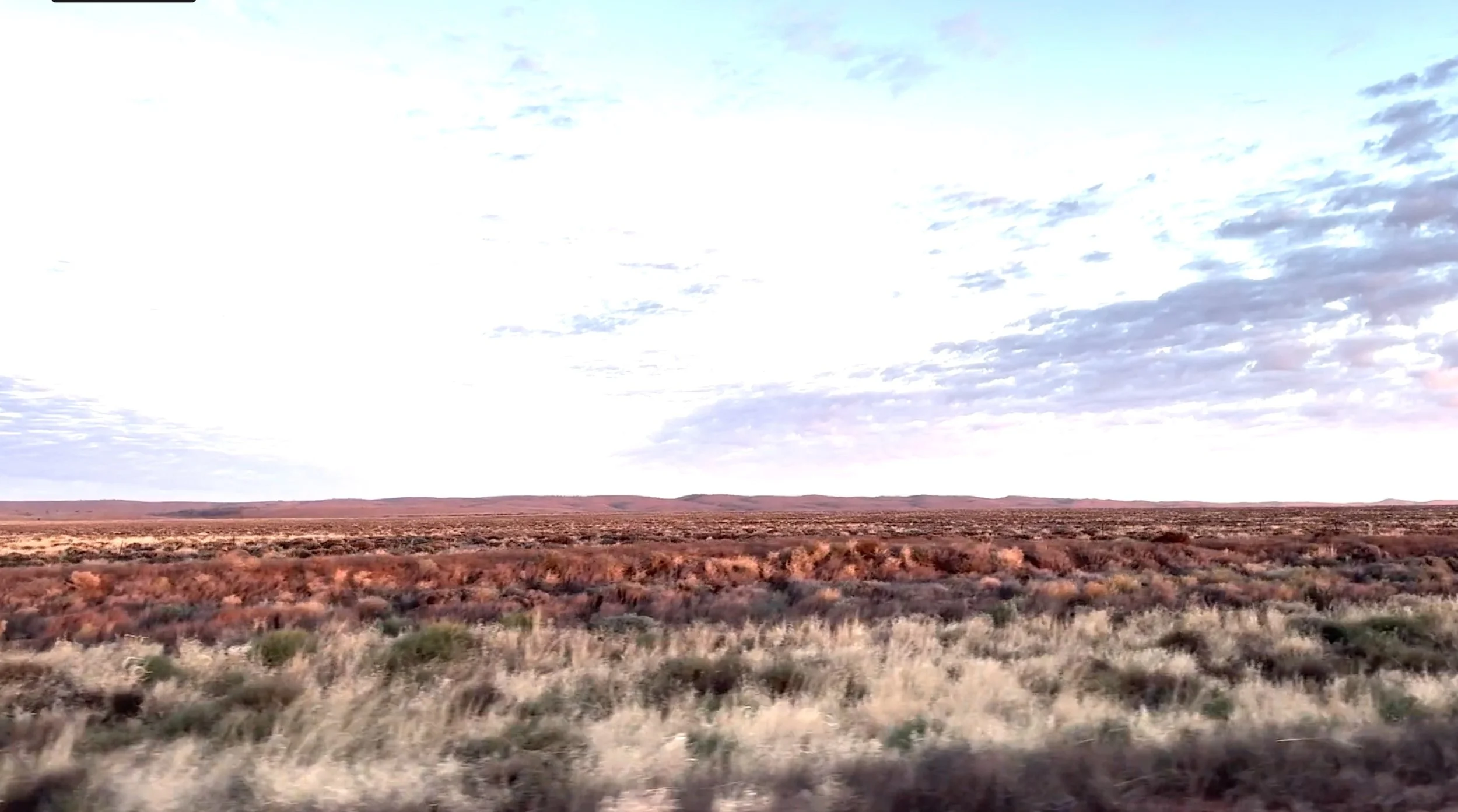
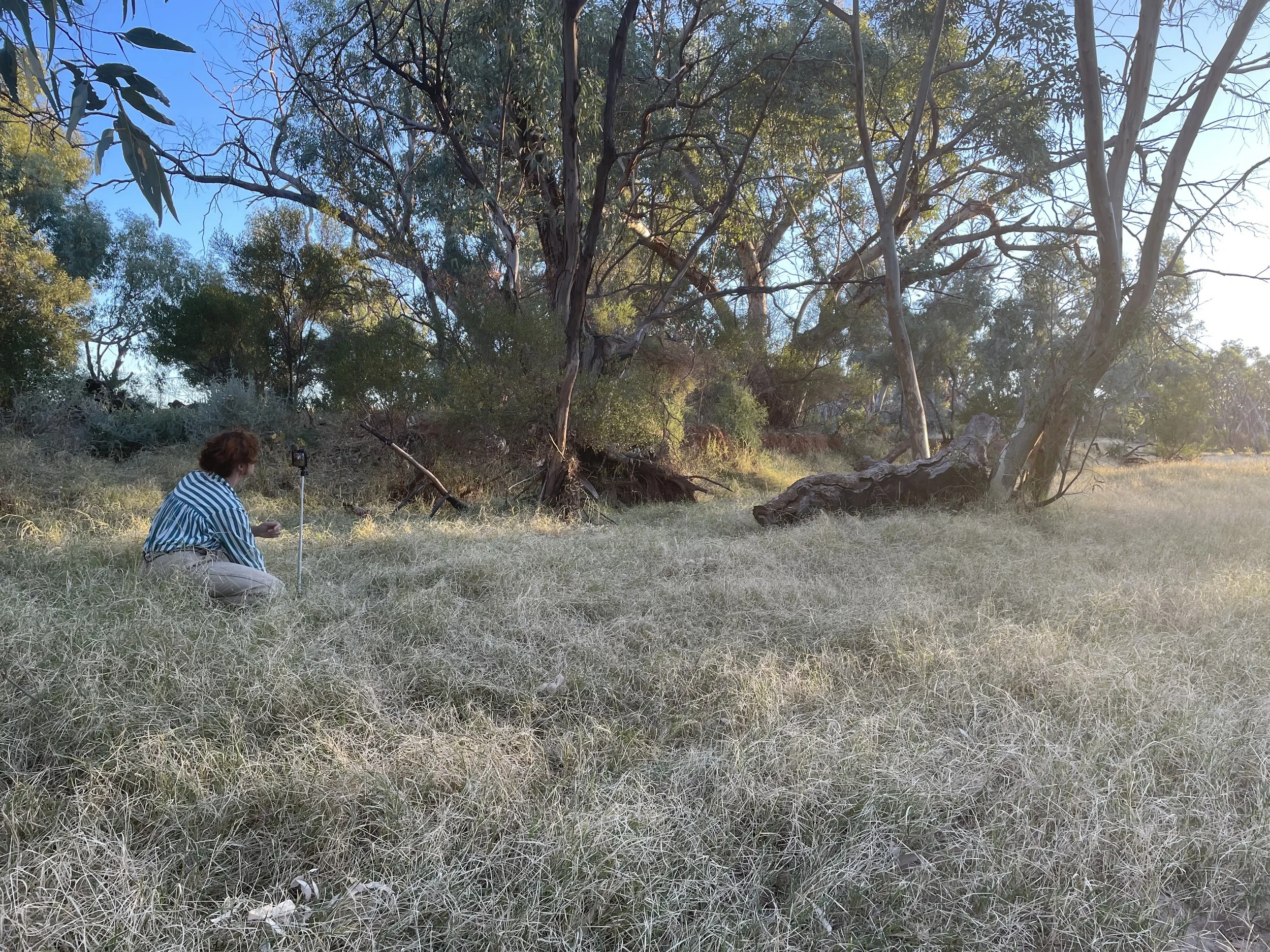
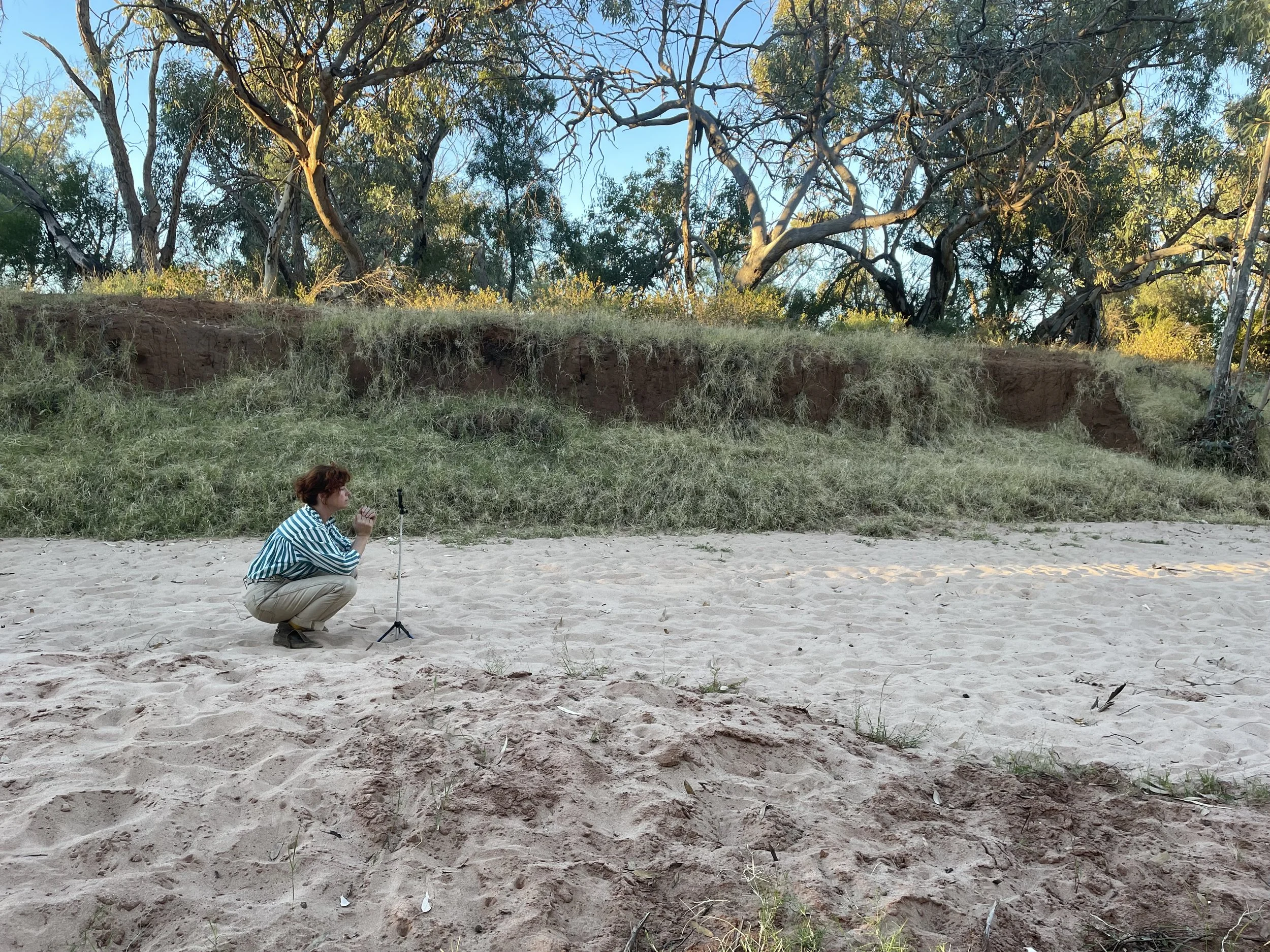
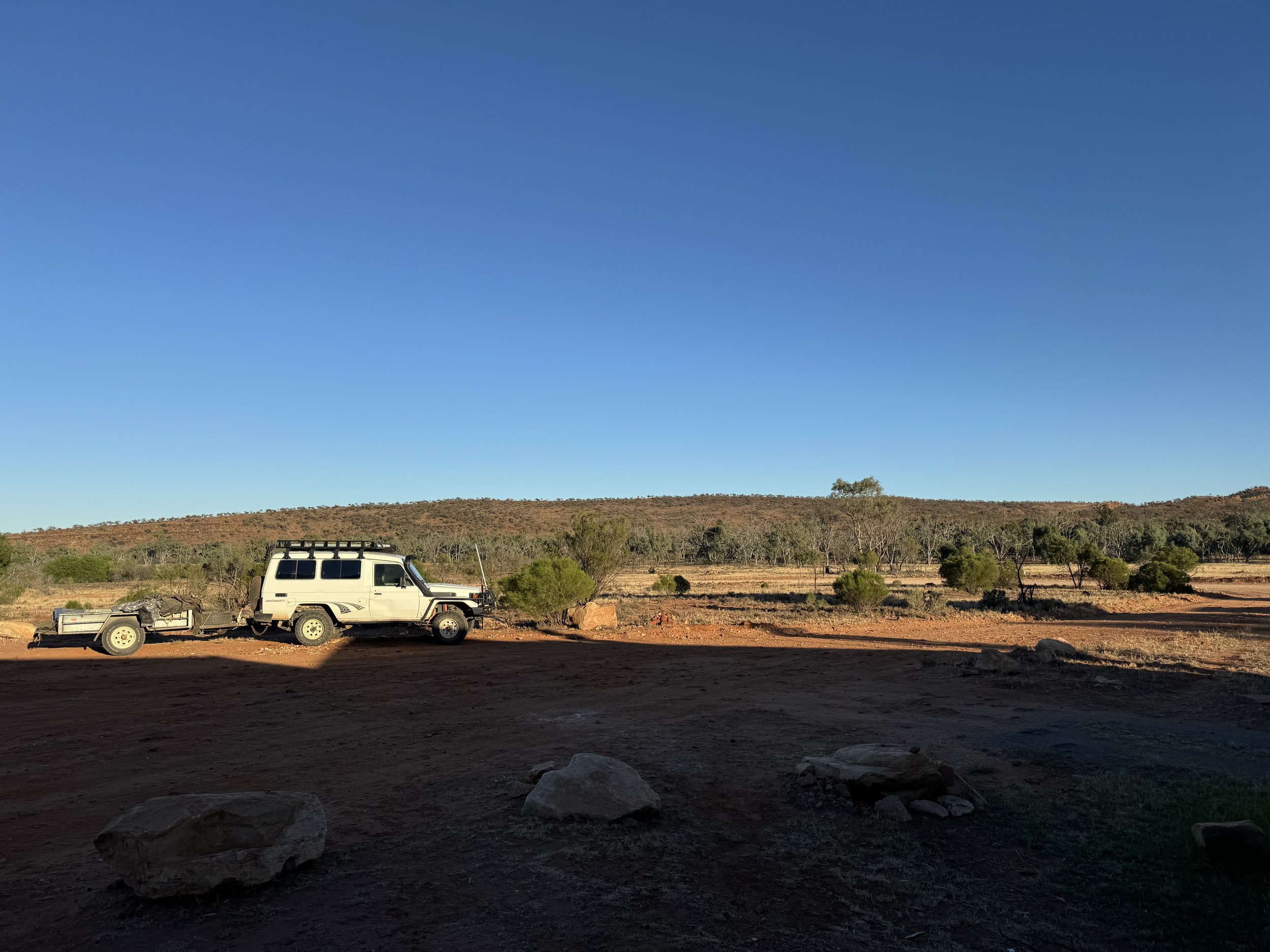
Same Time/Same Place playfully explores the idea of a multispecies ephemeral opera set on Wilyakali and Barkandji Country in the arid zone of far west NSW; a resilient and adaptive ecology that experiences dramatic changes from dormancy to abundance. Triggered by the phenomenon of rain, the seemingly sparse landscape can burst into life with shimmering crescendos of colour and movement - of wildflowers and flocking birds. Creeks spontaneously flow, synchronising frogs to wake from aestivation (dormancy). In this multispecies chorus, duets and intertwining arias emerge, signifying the cycles and interconnection of life. Bringing together human and non-human voices as if place itself conducts the opera.
Looking to unravel and expand traditional notions of opera as a multisensory provocation, Same Time/Same Place is part ecological doco, part sonic tapestry, part scenic art saga, part experimental community flash mob; made up of many parts, reading the landscape like a musical score, and invoked through democratic means of workshops, participation, sampling, collective making, shape notes…. karaoke?! Weaving an interconnected tapestry of sound and movement through place-based acoustics, composition, form, materials and colour.
Becoming a democratic and collective act.
Braiding multispecies song, community body percussion, choreography inspired by swarm intelligence, myrmecochory (seed dispersal dance by ants), collective behaviour and Broken Hill’s social history as the cradle of the Australian union movement, and further the way living beings respond to and navigate each other and their environments.
Like a spontaneous dance where no one knows the steps, but everyone moves in harmony.
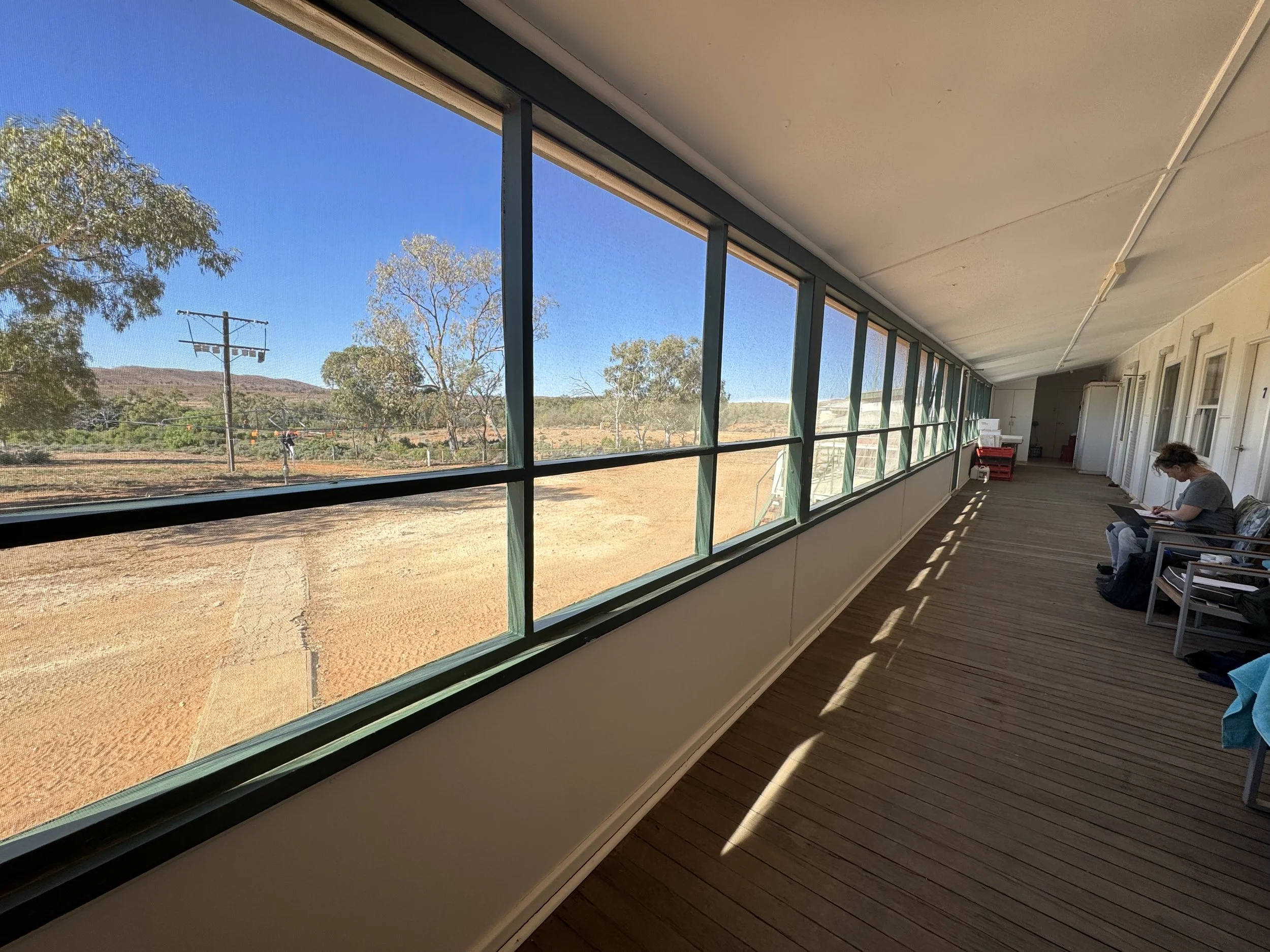
The project has been developed through a series of observations, recordings, sensory collaborations, workshops, collective making and sometimes brief, on-going - and long distance relationships between interdisciplinary artist/everyway weaver Charlotte Haywood, composer/multi-instrumentalist Sue Simpson and the multispecies participants, communities, ecologies, voices and expanse of Wilyakali and Barkandji Countries, Broken Hill, Fowlers Gap Research station, Silverton, Imperial Lakes, zebra finches, willie wagtails, butcher birds, magpies, crows, wedge-tailed eagles, billy goats, kangaroos, water holding frogs, desert trilling frog, Peron’s laughing tree frog, seed dispersing ants, saltbush, blue bush, velvet potato bush, mulga, river red gum, dead finish, the chorus of grasses, AACES Group, arts/COOL, Leroy Johnson, Aimee Volkofsky, CW Stoneking, Claudia Vidal Aguilar, Edward Horne, Hamish McCormick, Simon Griffith (behavioural ecologist), the Broken Hill Civic Orchestra, the Barrier Industrial Unions Brass Band, the Broken Hill Philharmonic Choir …
Braiding multispecies song, community body percussion, choreography inspired by swarm intelligence, myrmecochory (seed dispersal dance by ants), collective behaviour and Broken Hill’s social history as the cradle of the Australian union movement, and further the way living beings respond to and navigate each other and their environments.
Like a spontaneous dance where no one knows the steps, but everyone moves in harmony.
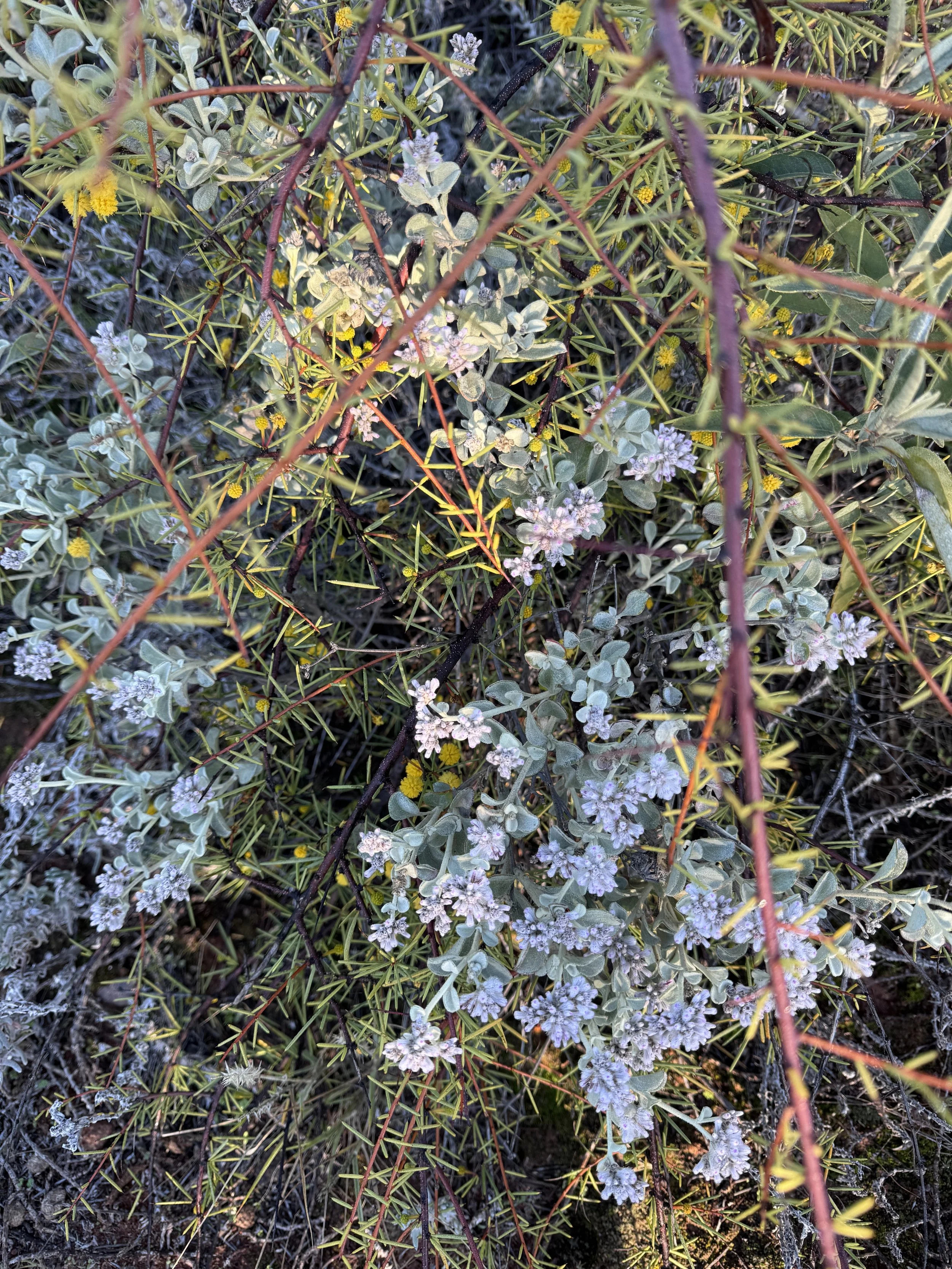
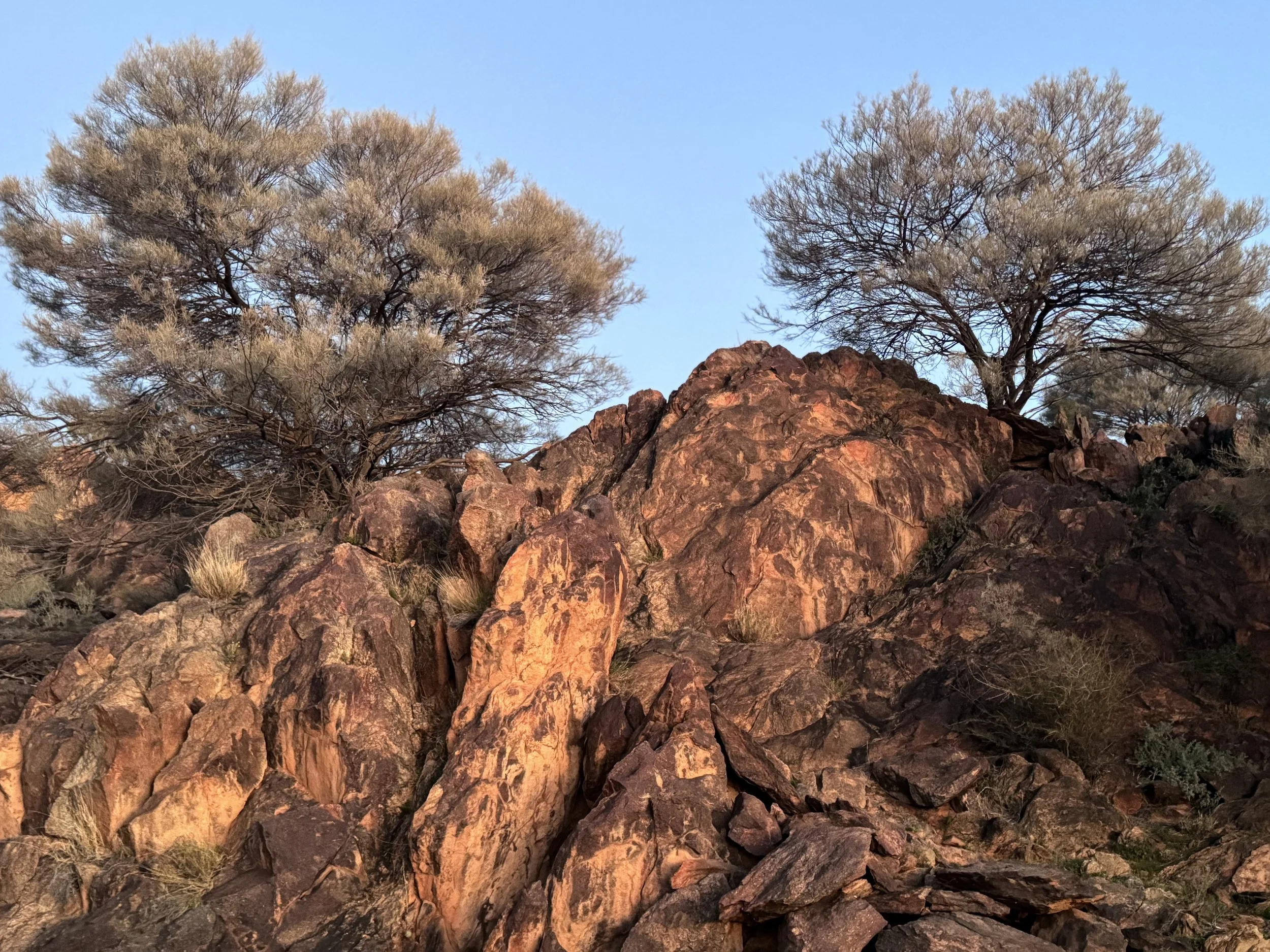
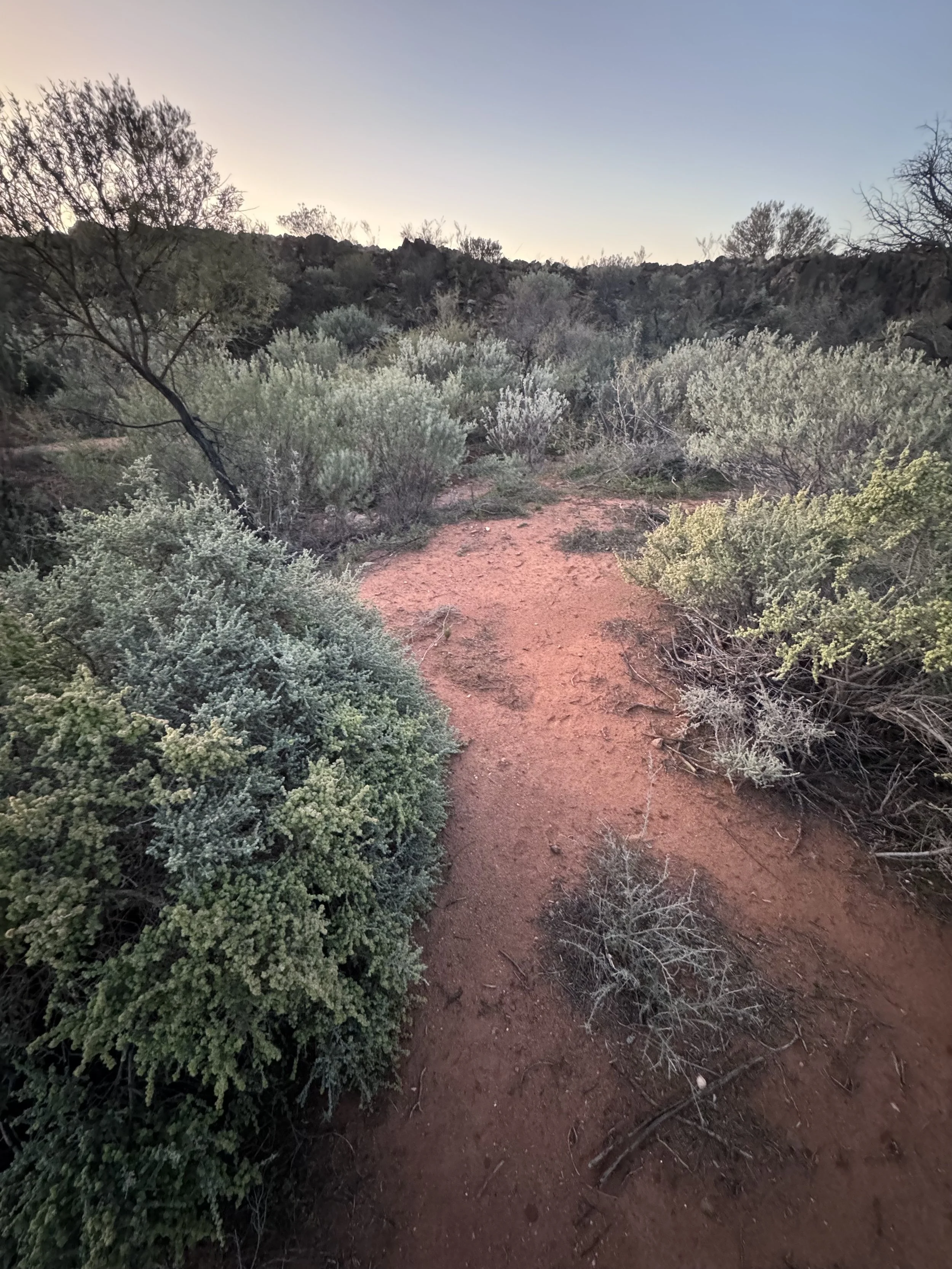
Maireana sedifolia (Pearl Bluebush)
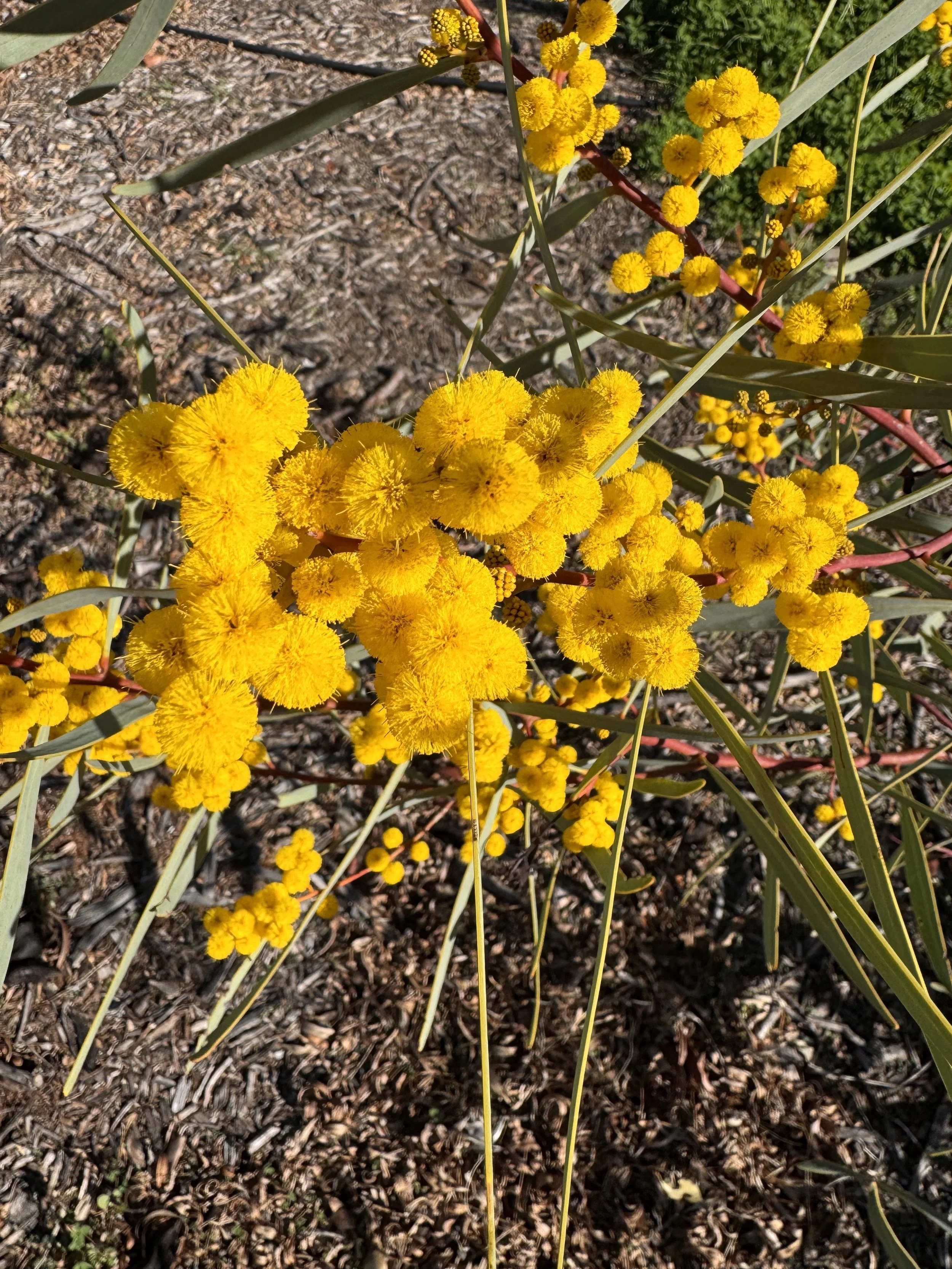
Acacia notabilis (Notable Wattle)
The project has been developed through a series of observations, recordings, sensory collaborations, workshops, collective making and sometimes brief, on-going - and long distance relationships between interdisciplinary artist/everyway weaver Charlotte Haywood, composer/multi-instrumentalist Sue Simpson and the multispecies participants, communities, ecologies, voices and expanse of Wilyakali and Barkandji Countries, Broken Hill, Fowlers Gap Research station, Silverton, Imperial Lakes, zebra finches, willie wagtails, butcher birds, magpies, crows, wedge-tailed eagles, billy goats, kangaroos, water holding frogs, desert trilling frog, Peron’s laughing tree frog, seed dispersing ants, saltbush, blue bush, velvet potato bush, mulga, river red gum, dead finish, the chorus of grasses, AACES Group, arts/COOL, Leroy Johnson, Aimee Volkofsky, CW Stoneking, Claudia Vidal Aguilar, Edward Horne, Hamish McCormick, Simon Griffith (behavioural ecologist), the Broken Hill Civic Orchestra, the Barrier Industrial Unions Brass Band, the Broken Hill Philharmonic Choir …
Acacia notabilis
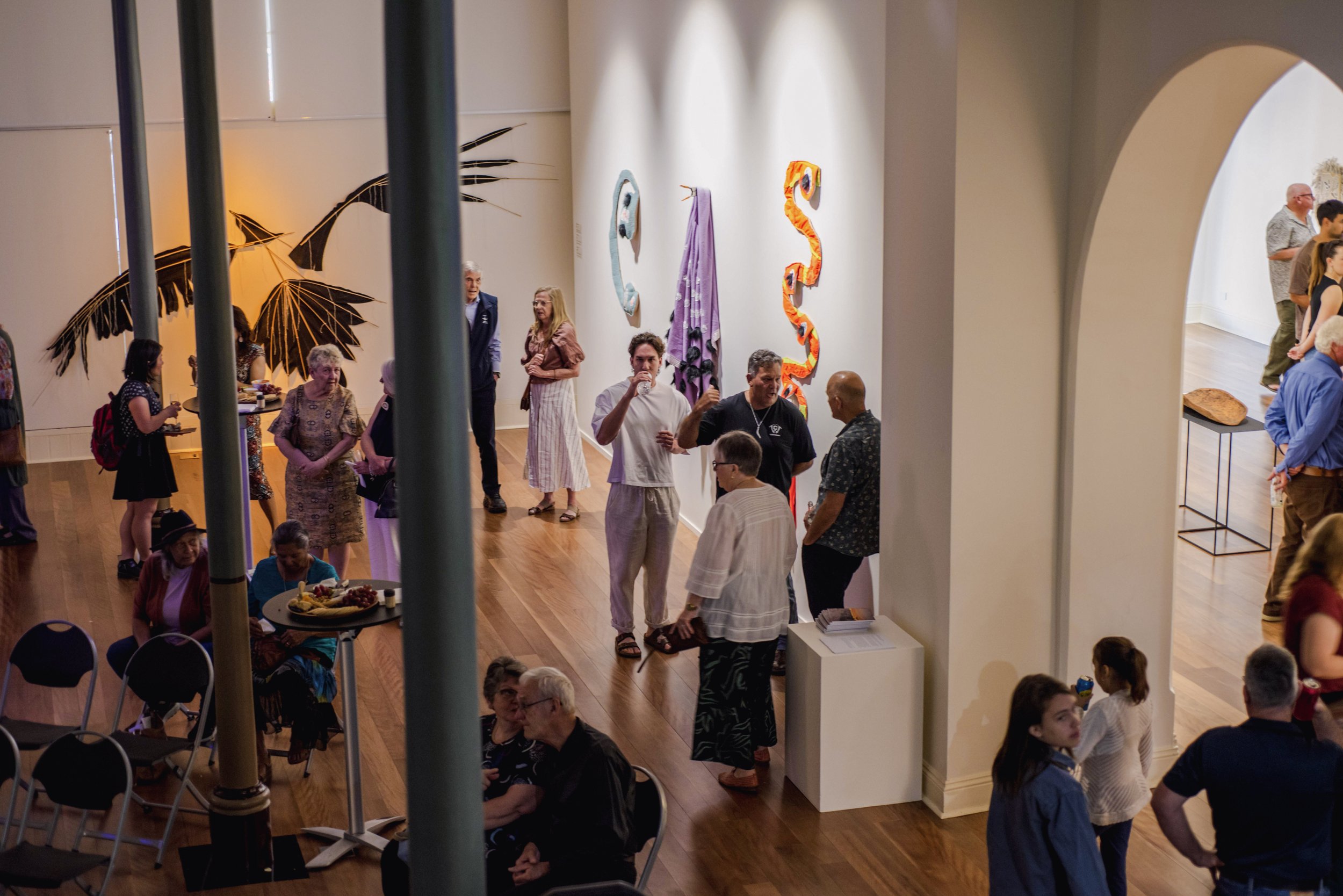
Opening, Broken Hill City Art Gallery
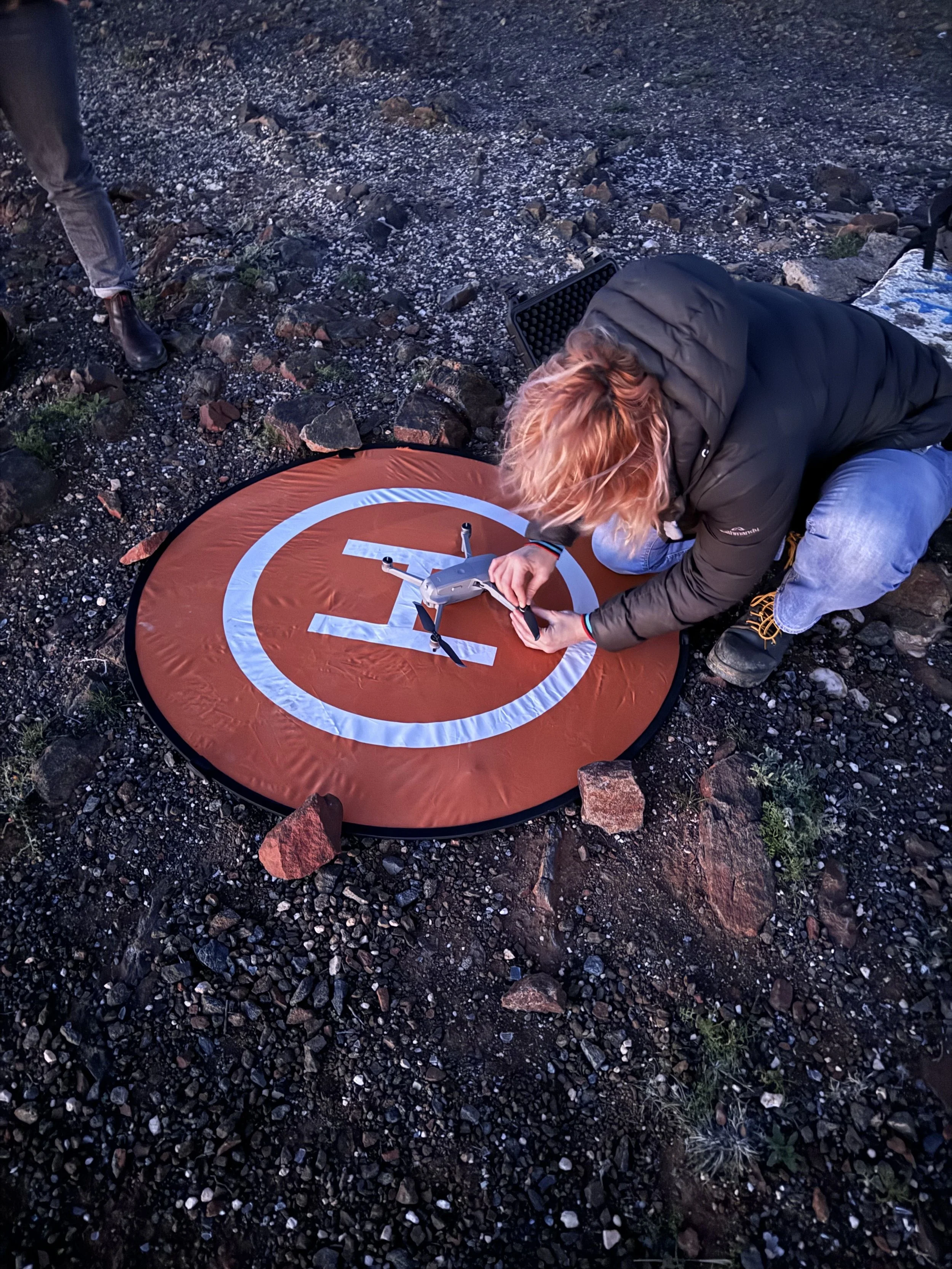
The project was created using experimental processes, from drones to phone footage, sonic field recordings, cumbia to collective body percussion; making in ensemble, recording live instrumentation and vocals to electronic sampling. Seeding relationships, fruiting ideas of collaboration and symbiosis, as vulnerable spaces that rely on thresholds of curiosity, trust, generosity, exploration, intuition, adaptability and embodied knowledge; allowing emergent phenomena to awaken and ferment.
Asking: what are the fertile conditions that allow for creation/life to flourish?
Sonic Tapestry can be experienced here
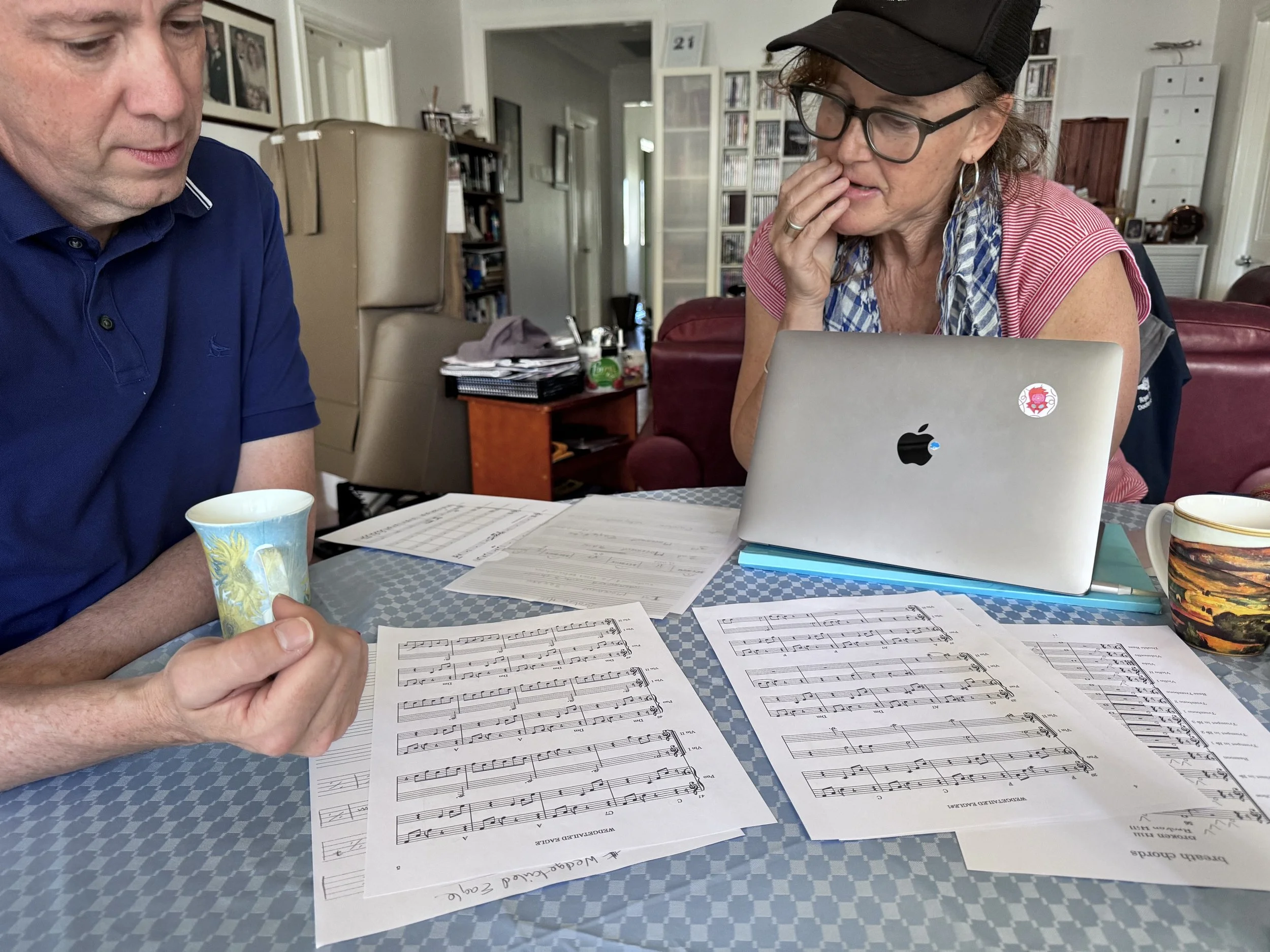
SHAPE NOTES derive from community singing allowing for sight “reading” of shape notes, for those who cannot read traditional musical notation. Whereby the shape of the notes denote the sound. Denounced by critics as uncouth, yet allowing for a democratic reading of music, it’s traditions are from social singing found since 1801 in American sacred music, singing schools, musical conventions and all day gatherings known as ‘singings’. Pennsylvania and the Ohio River valley were early centres of shape-note publication. Many shape-note books included “folk hymns” or tunes drawn from oral tradition. Shape notes as a system of reading music can be traced further to Guido d’Aresso, an 11th century Italian monk who assigned the syllables ut, re, mi, fa, sol, and la to the six-note series of a hexachord- that corresponds to what is now recognised and the first six degrees of the major scale. The tradition has attracted gospel, folklorists and sacred harp singing. Whilst in decline it still attracts traditional community singing.
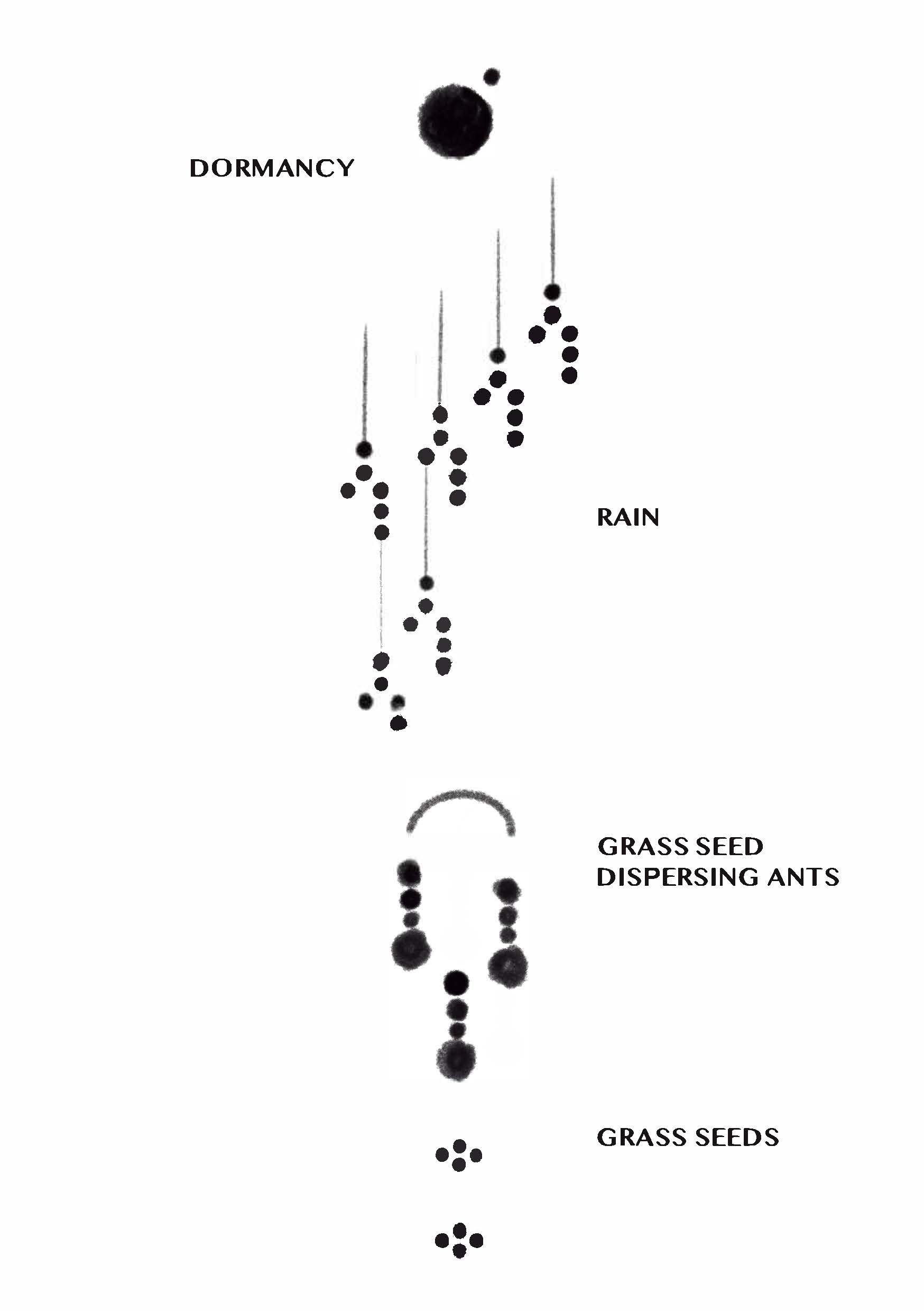
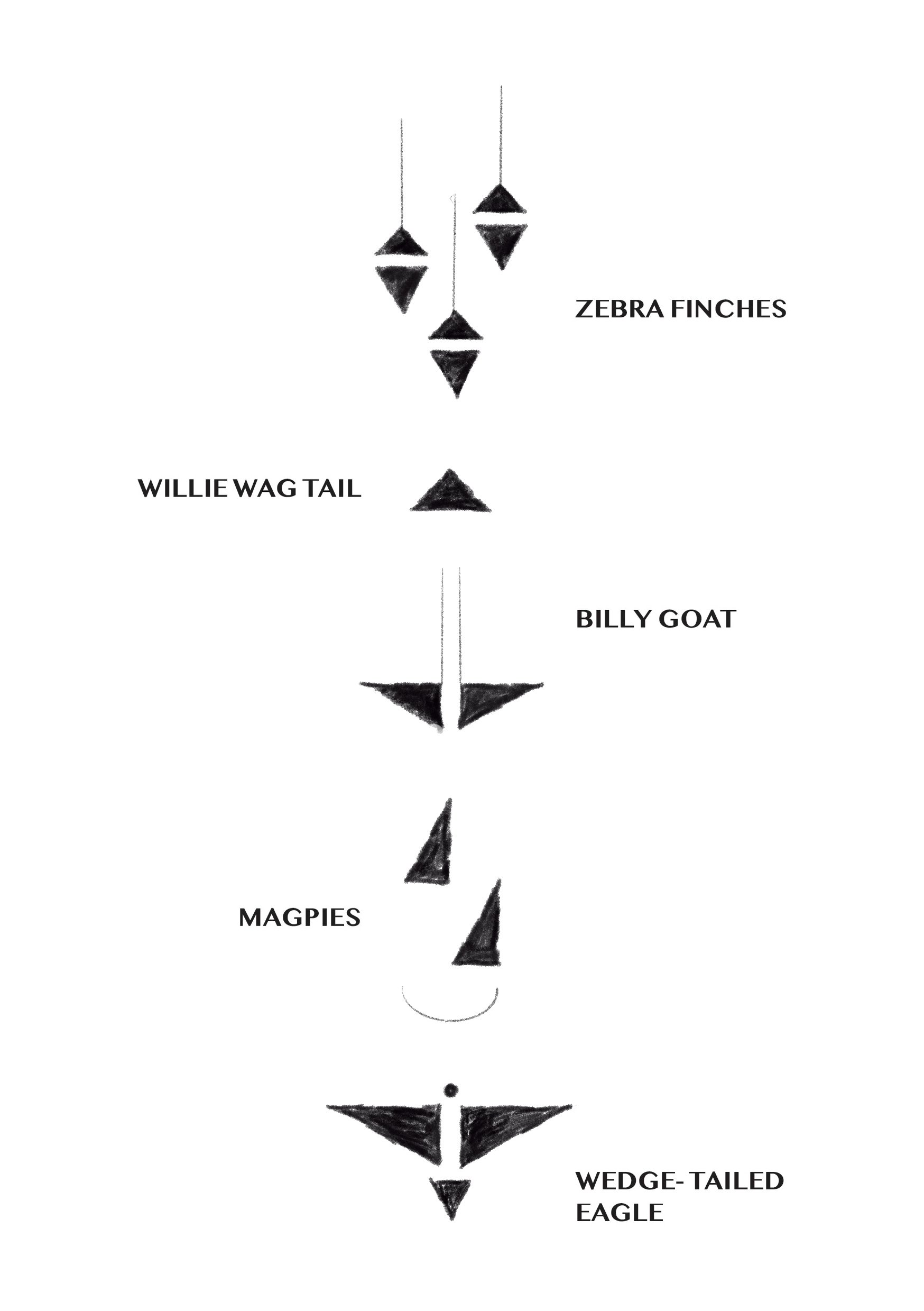
LIBRETTO Of Multispecies (karaoke) opera, 2024
DORMANCY (ensemble)
Water Holding Frog, desert trilling frog, Butcher Birds, CW Stoneking, Paul Adcock, Simone Sky, Sue Simpson, Charlotte Haywood
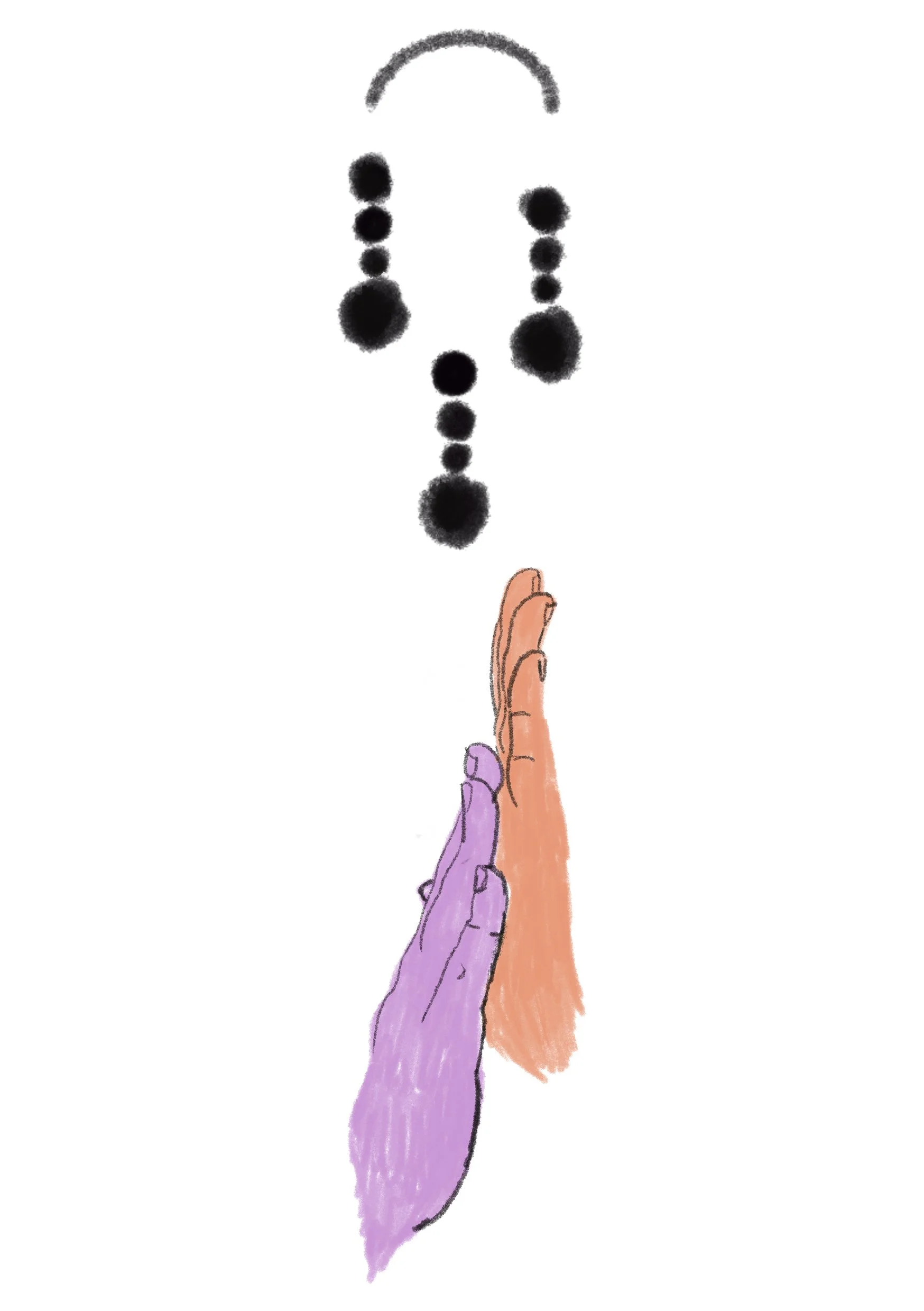
GRASS SEED DISPERSING ANTS (duet)
Ants, Sue Simpson, Charlotte Haywood
WEDGE-TAILED EAGLE (finale)
Sue Simpson, Barrier Union Brass Band, Broken Hill Orchestra, community
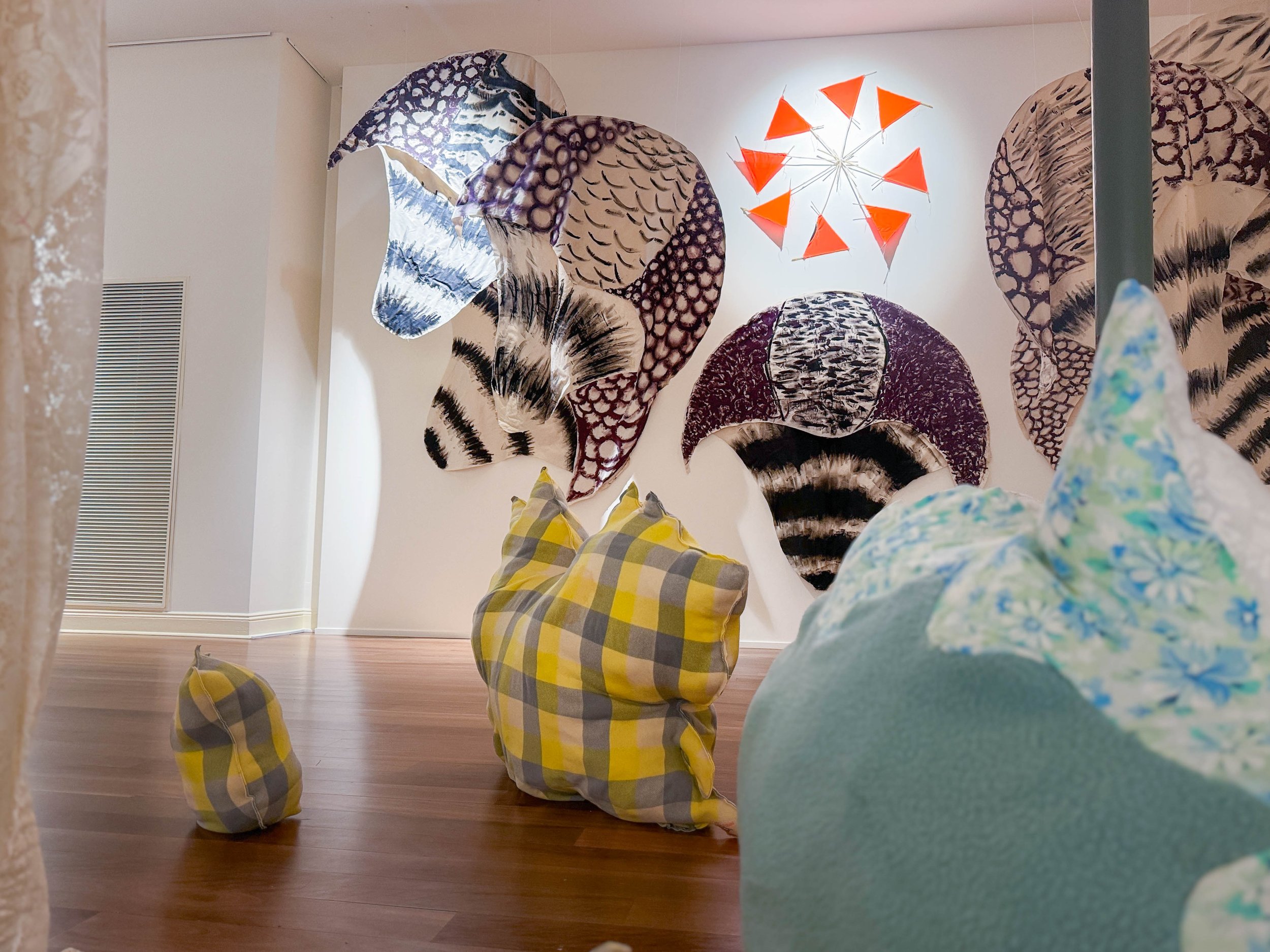
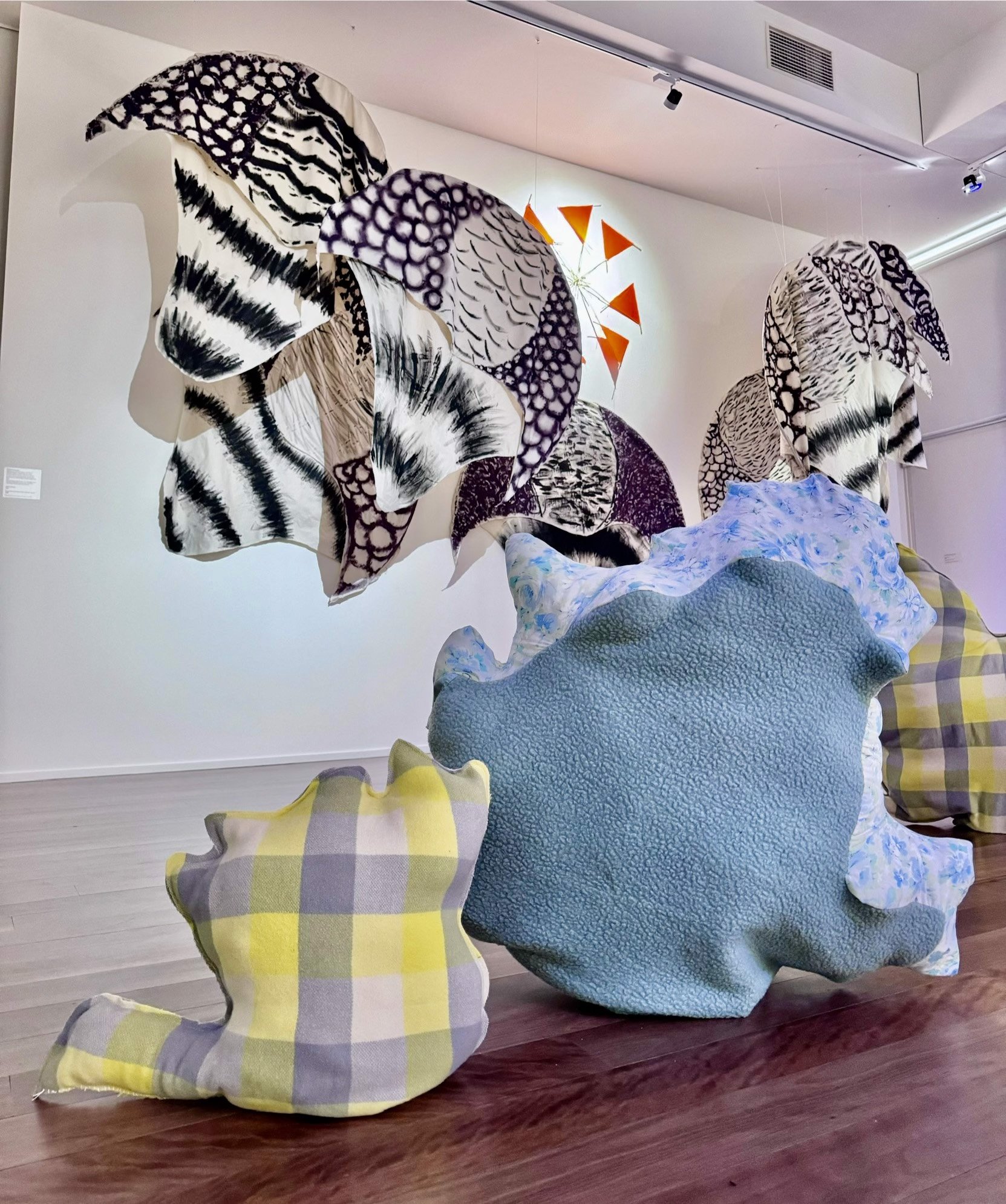
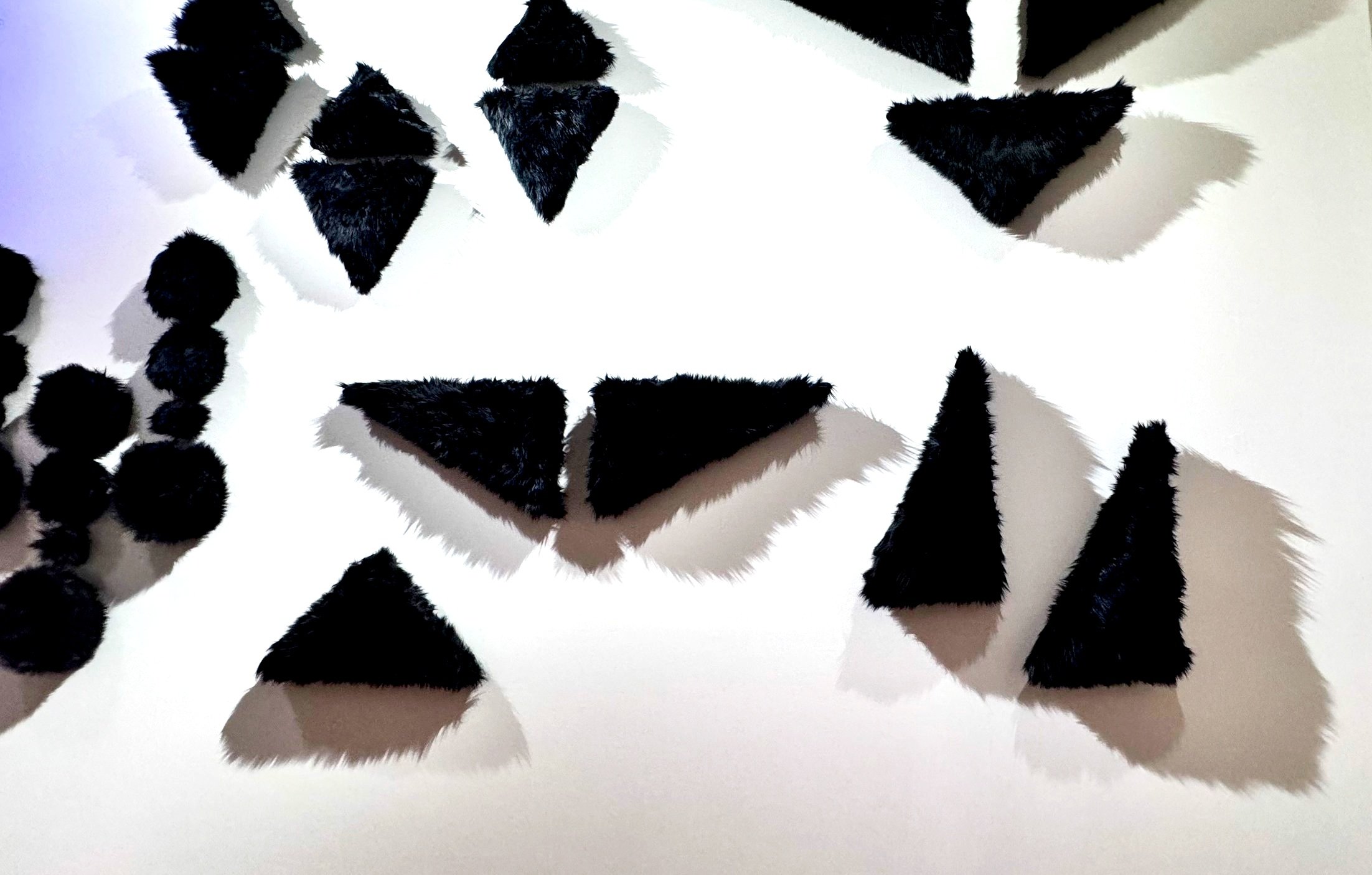
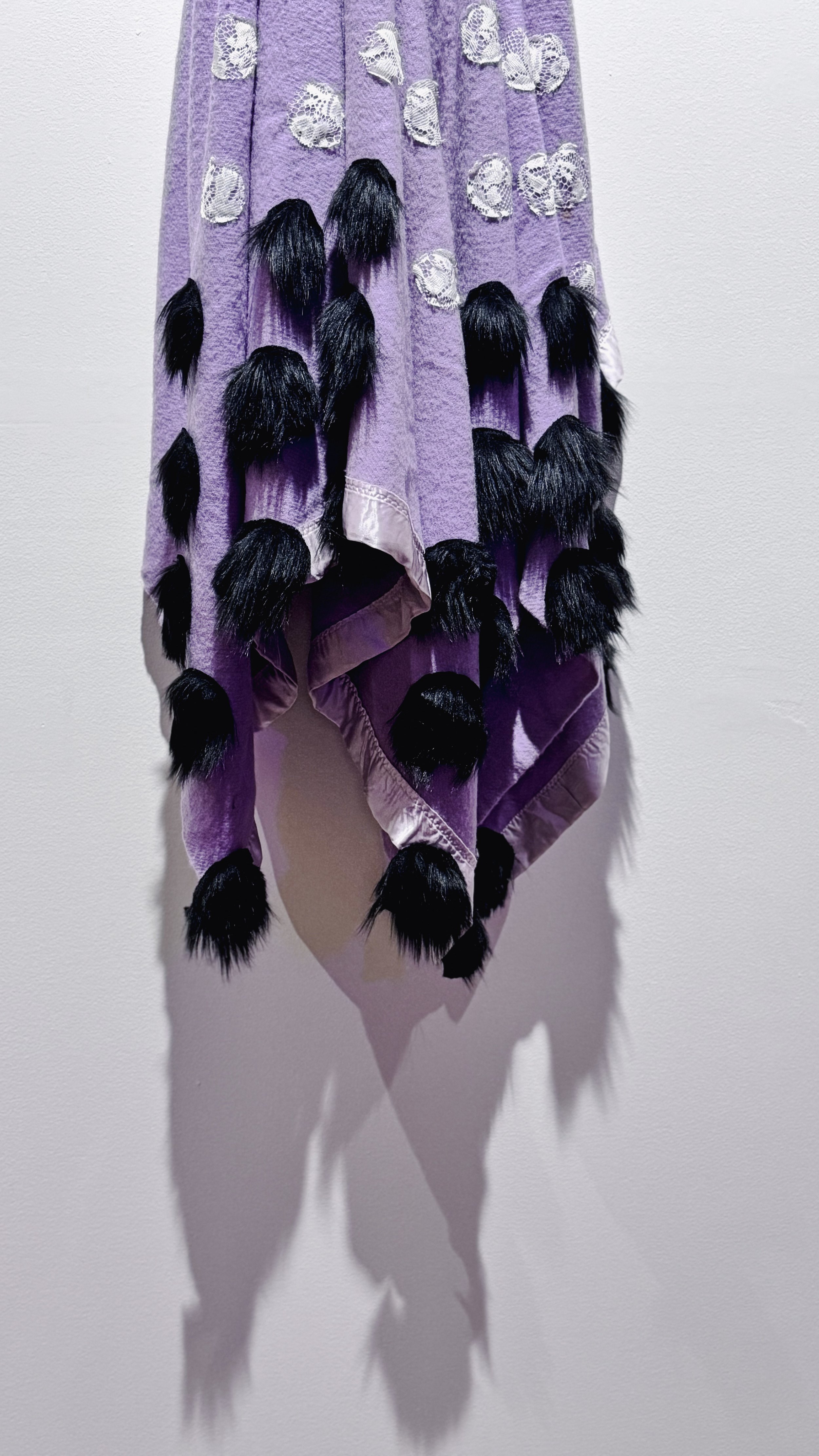
repurposed faux- fur
MYRMECOCHORY comes from Ancient Greek, μύρμηξ, myrmēks “ant” and χορεία khore.ā "circular dance". An ecologically significant ant-plant interaction with worldwide distribution, whereby certain plants have developed relationships with ants encouraging them with chemical attractants and nutritional benefits in exchange for their seed dispersal. Which has the advantages of seedling growth more likely.
shape notes
LIBRETTO Of Multispecies (karaoke) opera, 2024
KARAOKE (カラオケ) translates from kara 空 “empty” and ōkesutora オーケストラ “orchestra” and is a type of interactive entertainment, or sing -a- long. For Same Time/Same Place, karaoke is used as a framework to invite participants and community members to either sing- a long, dance- a long, make -a long or make music- a long through classical instrumentation, body percussion, vocals, textile and sculpture making.
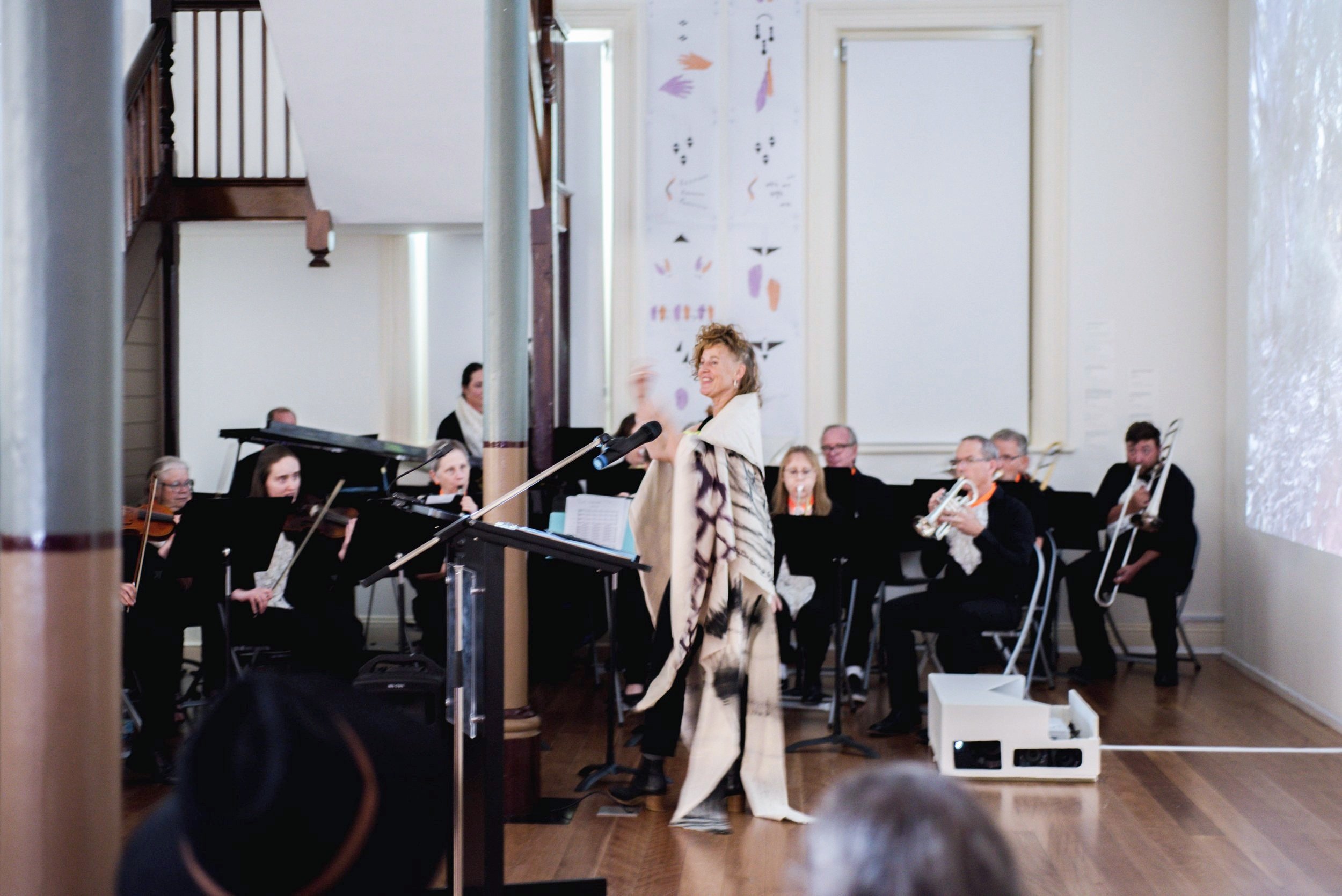
Performing Wedge Tailed Eagle
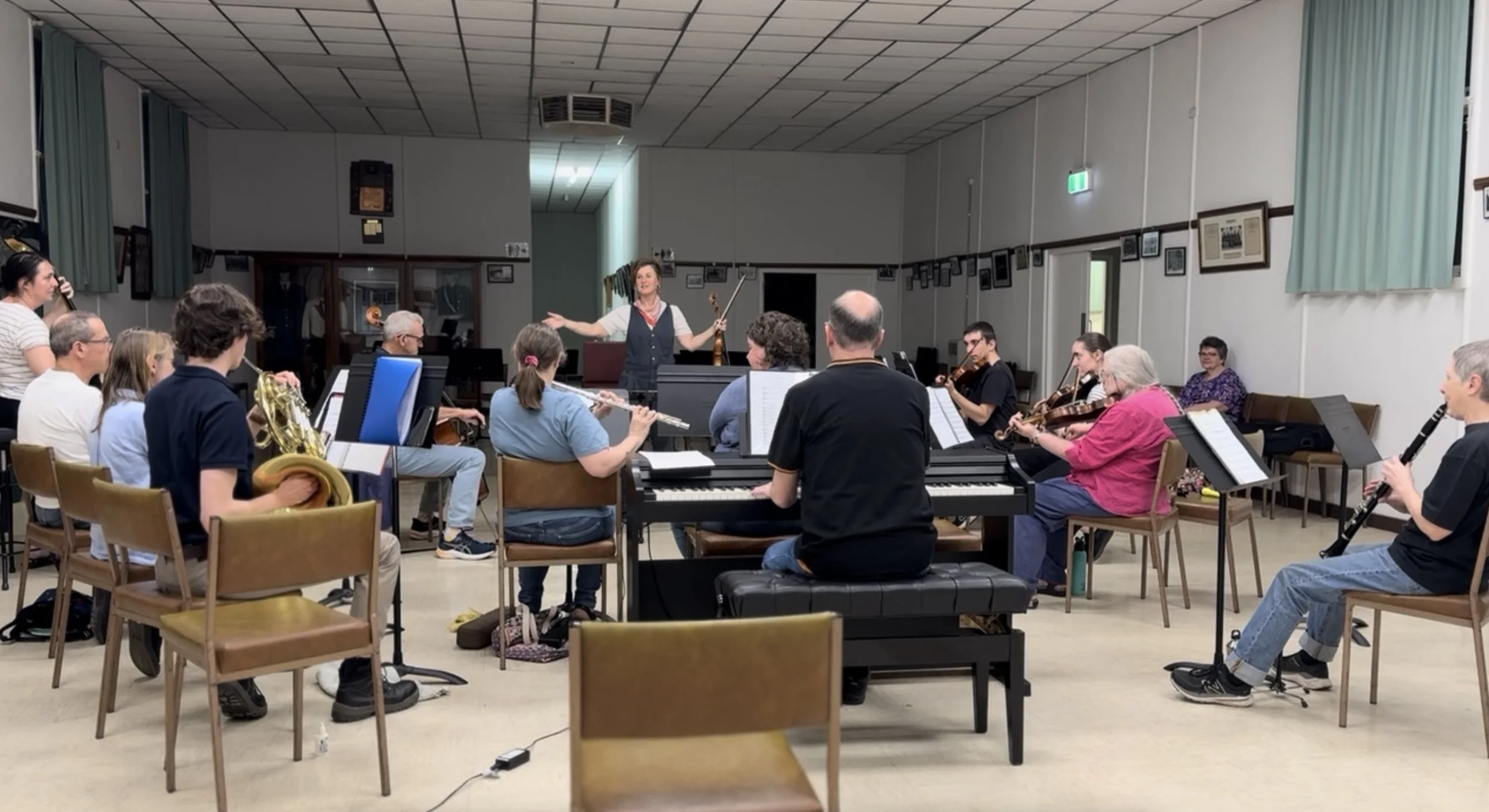
Composer Sue Simpson with the Broken Hill Civic Orchestra + Barrier Union Brass Band
Video installation
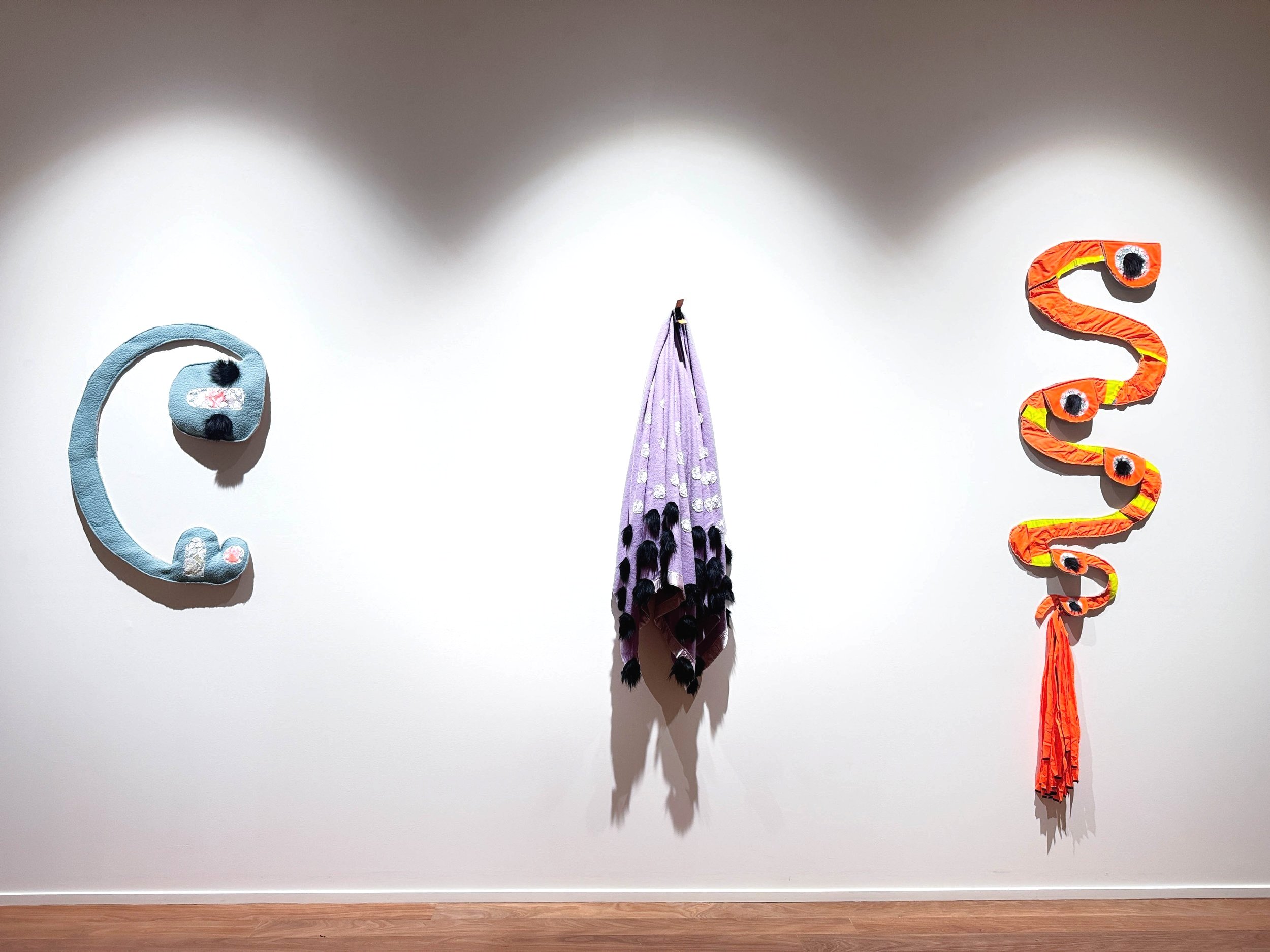
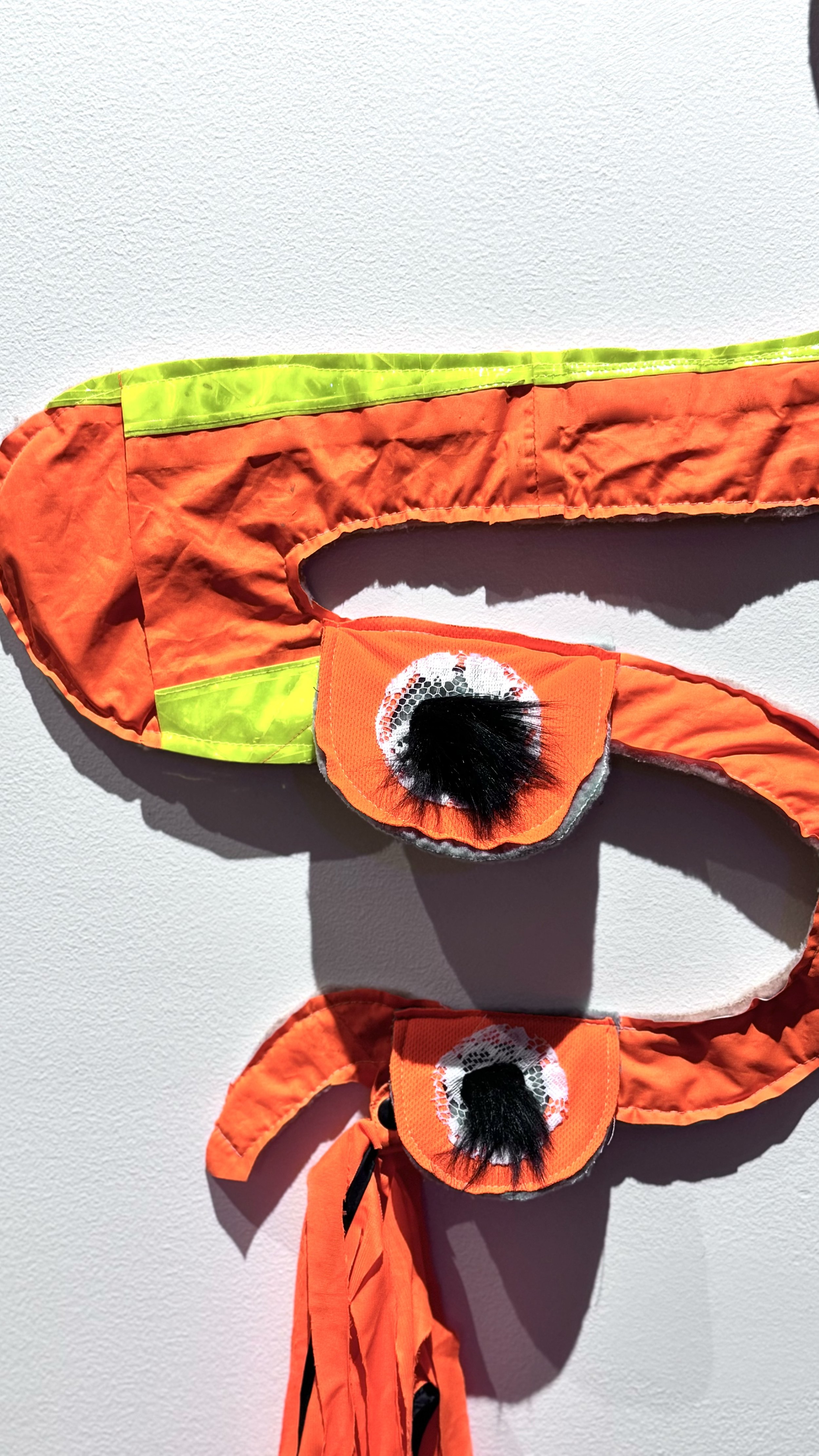
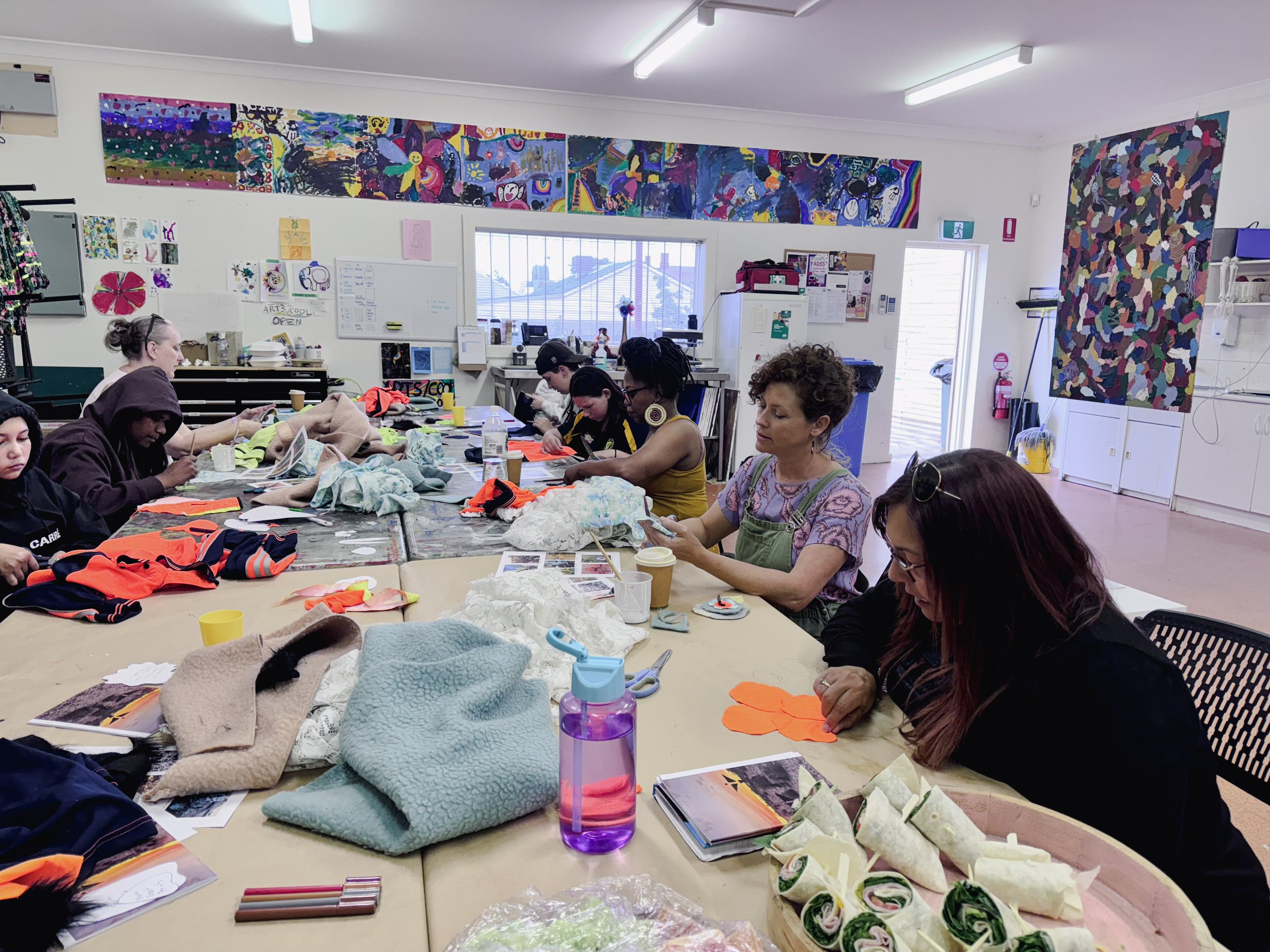
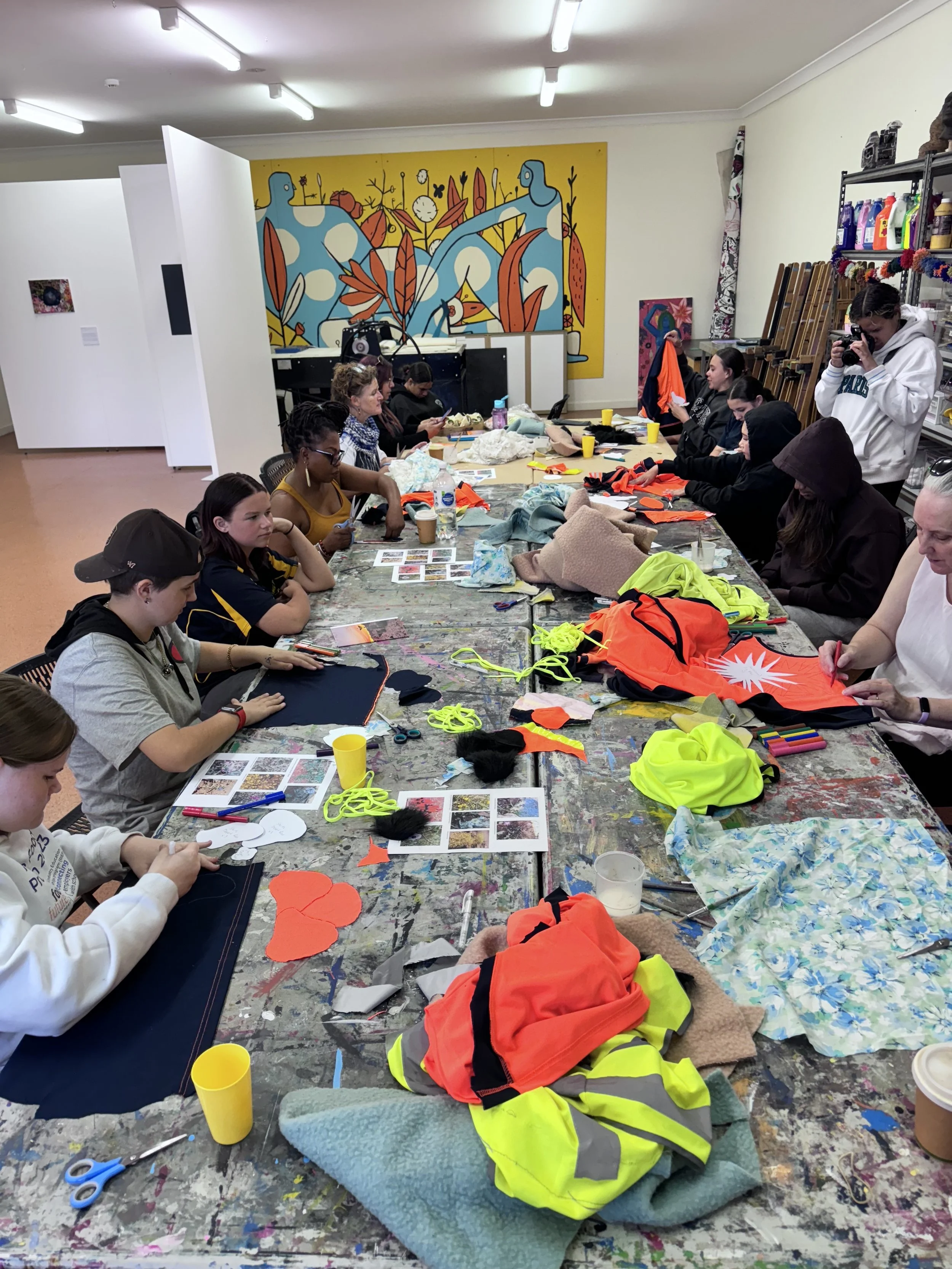
Broken Hill found blankets, high vis, lace curtains, repurposed fur.
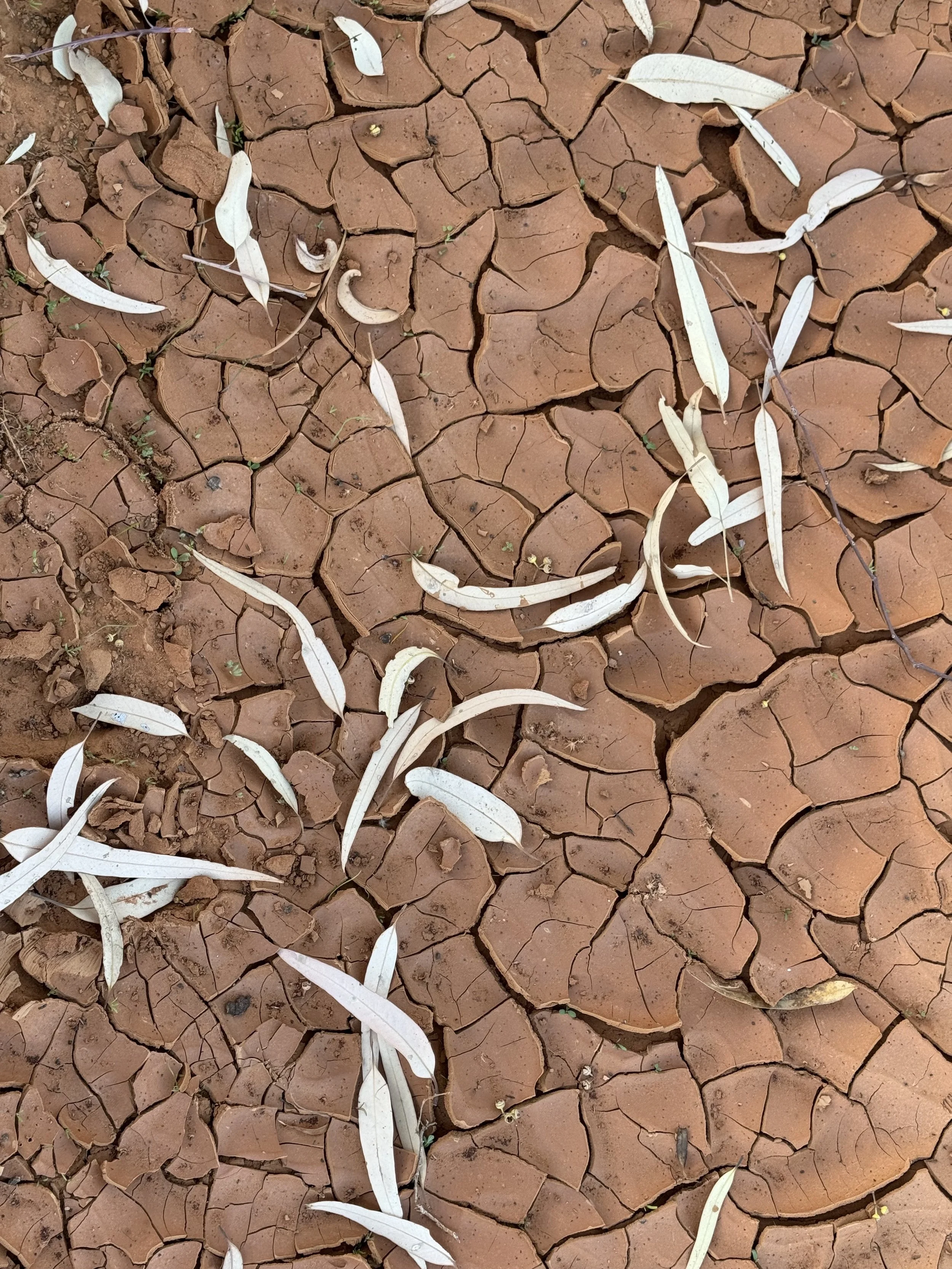
AESTIVATION is a form of dormancy or torpor that animals enter in response to extreme heat and arid conditions, primarily in the summer. The term originates from the Latin word aestivare, which means to spend the summer. This adaptation helps animals conserve energy and reduce the need for water. By effectively removing animals from the ecosystem, aestivation also plays a significant role in predator-prey relationships, seed dispersal, and other processes. The desert trilling frog and water holding frog can spend most of their lives in aestivtation, from months to decades, waiting for the right conditions to emerge of rainfall. Depending on the rainfall cycles, they may only awaken from their torpor 3-4 times in 20 years.
The project was created using experimental processes, from drones to phone footage, sonic field recordings, cumbia to collective body percussion; making in ensemble, recording live instrumentation and vocals to electronic sampling. Seeding relationships, fruiting ideas of collaboration and symbiosis, as vulnerable spaces that rely on thresholds of curiosity, trust, generosity, exploration, intuition, adaptability and embodied knowledge; allowing emergent phenomena to awaken and ferment.
Asking: what are the fertile conditions that allow for creation/life to flourish?
repurposed Broken Hill high-vis uniforms, lace curtain, black faux-fur
repurposed Broken Hill blanket, lace curtain, black faux-fur
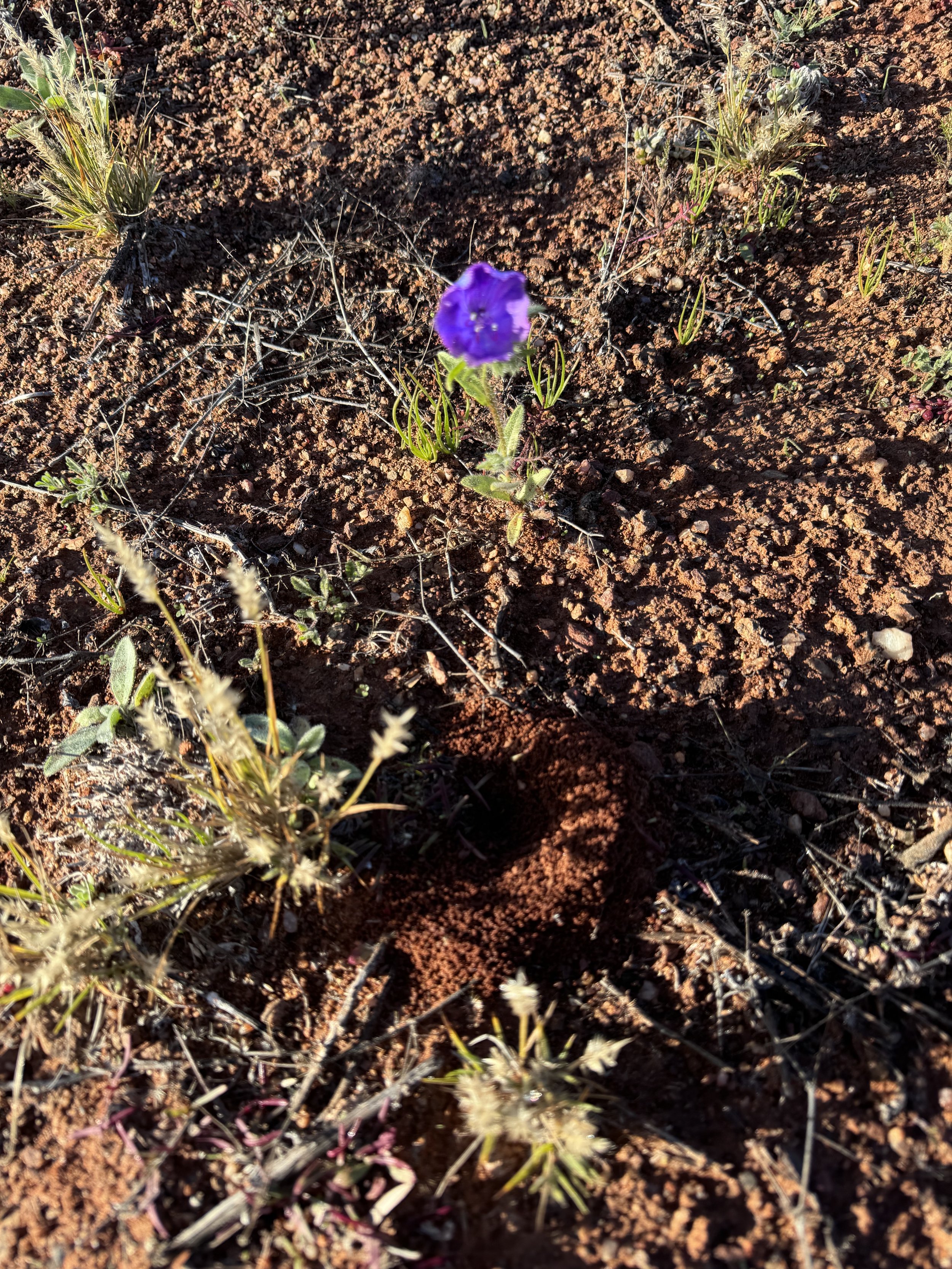
Stemodia florulenta
Installation
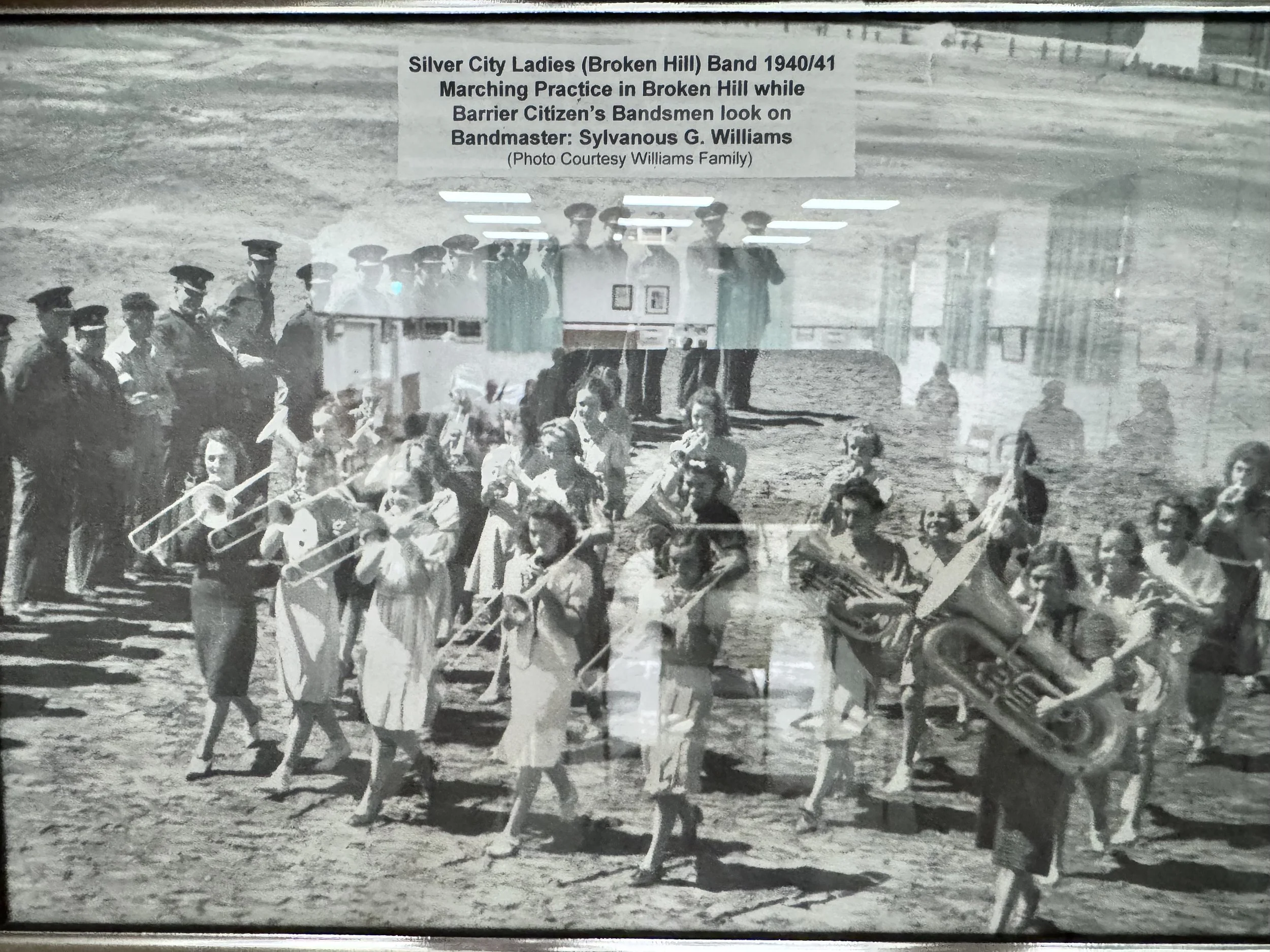
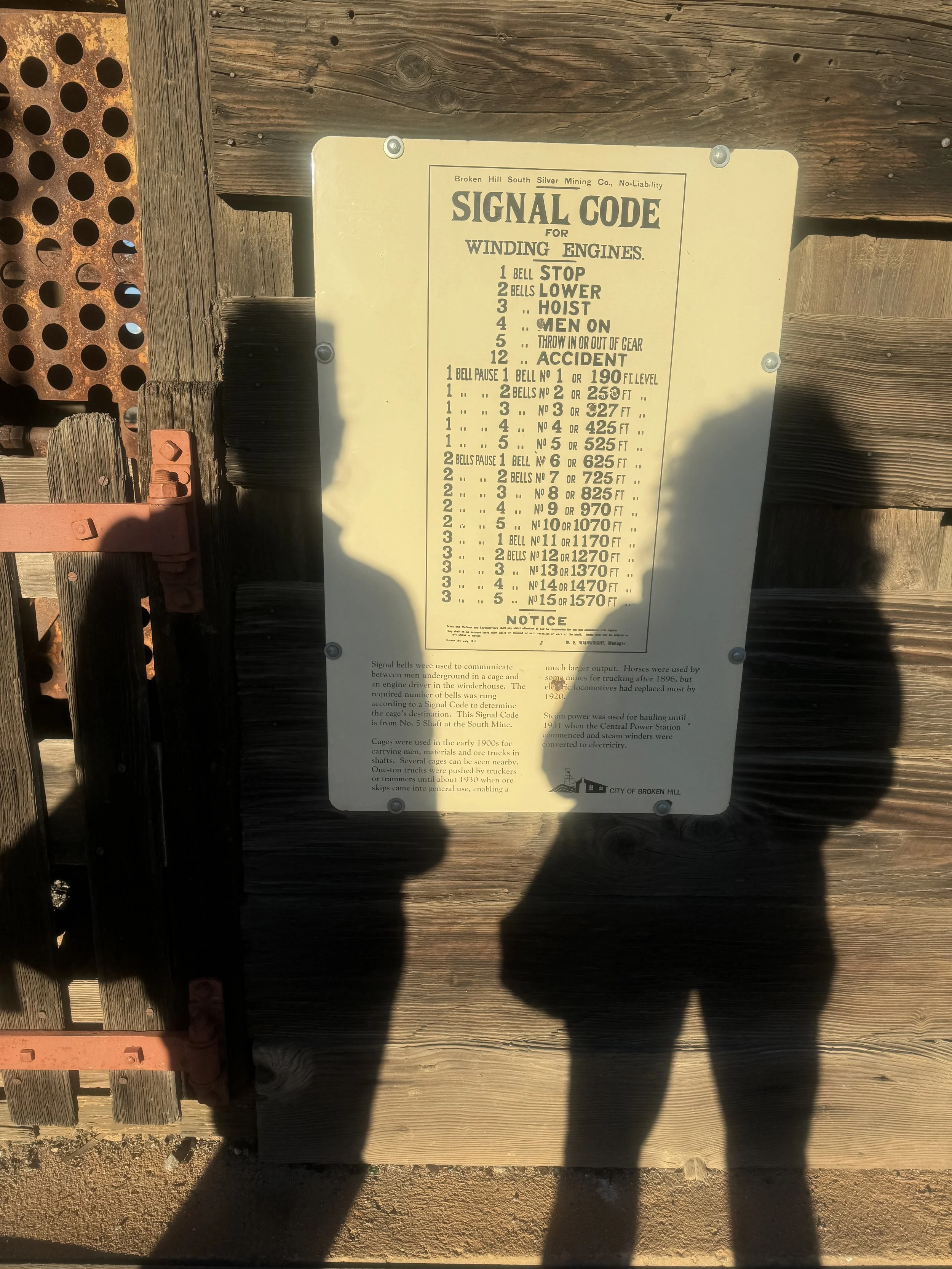
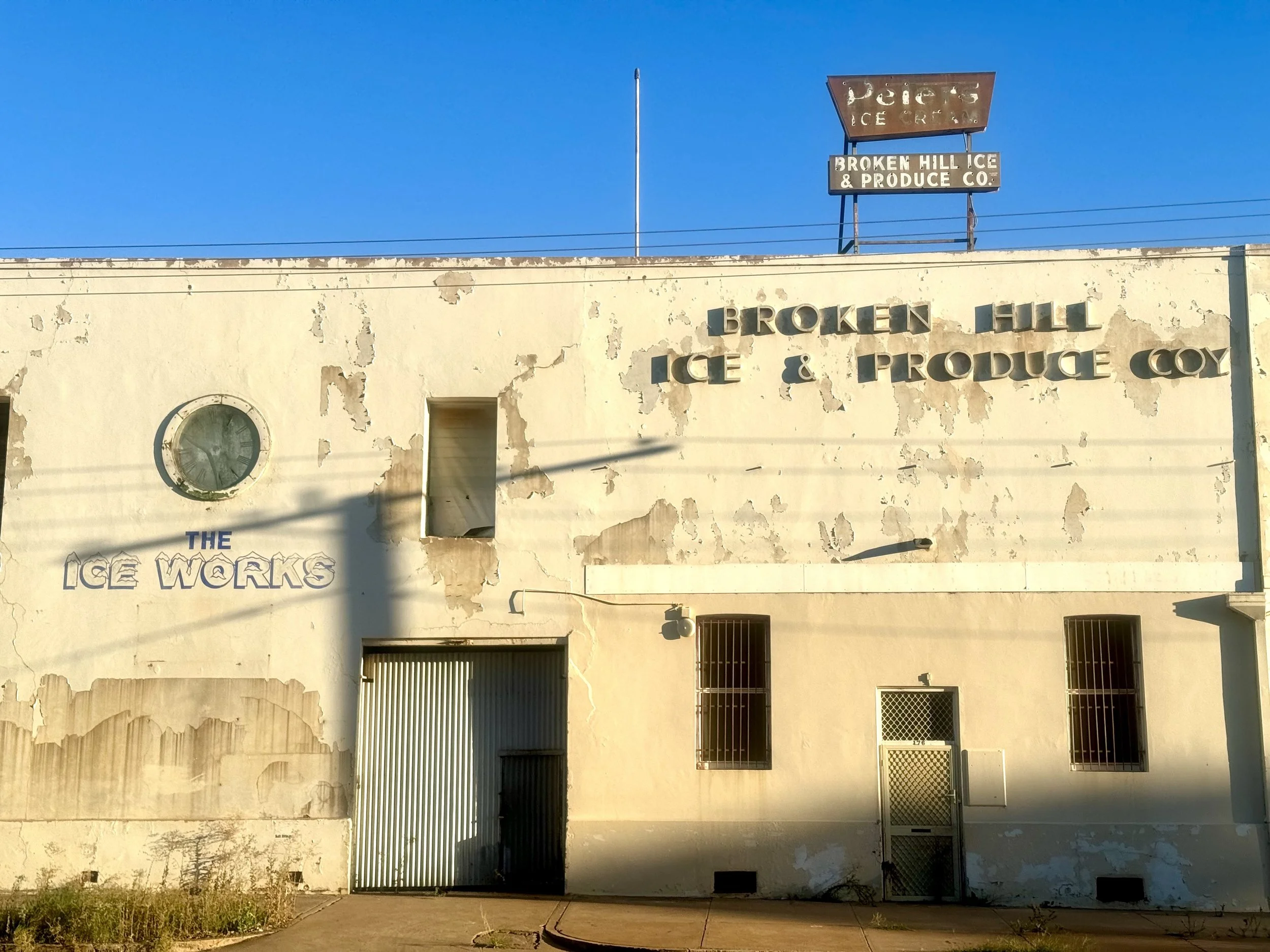
BROKEN HILL’S SOCIAL HISTORY
In the early years conditions for the miners were basic and often dangerous. Poor living conditions and negligent managerial policy fed into a strong union presence from the very start, and on the 20th Sept 1884 at the Adelaide Hotel Club in Silverton a Miners Association called the Barrier Rangers Miner’s Association was formed.
The very first steps of unionism were taken in Australia.
Later, the branch was moved to Broken Hill itself where the nearly 3000 union members, out-numbered the nonunion workers at a ratio of 7:1. Bitter industrial disputes and strikes followed in an effort to improve miners’ and workers’ rights, shaking the very foundations of the town in the years 1892, 1909 and 1912. Then in 1916, the battles led to the formation of the Broken Hill Trades and Labor Council. It wasn’t without controversy though, with the dominant union at the time, the Amalgamated Miner’s Association (AMA), initially refusing to join together with the council. Some tradesmen too were separately represented by the Iron Trades Council.
Later, however, the AMA was renamed the Workers’ Industrial Union of Australia and joined the Trades and Labor Council to eventually form the Barrier Industrial Council. The newly amalgamated group helped shape a fairer and safer workplace for our nation, and still to this very day, the B.I.C fights the fight for the workers and their rights and conditions under its banner “United We Stand-Divided We Fall“. (In Focus: Broken Hill, the birthplace of Australian unions, Dan Leece, Loco Express, Rail Tram and Bus Union)
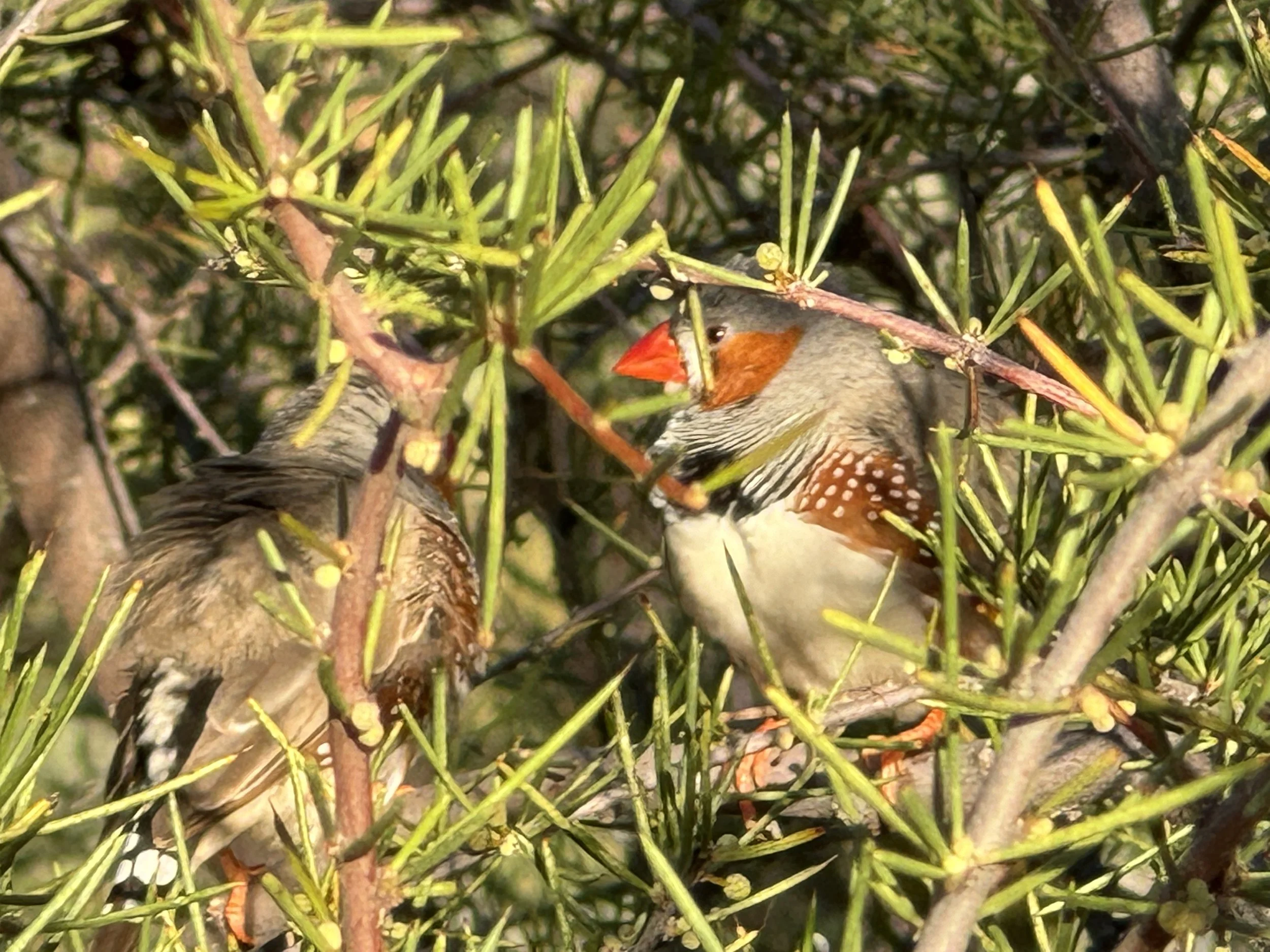
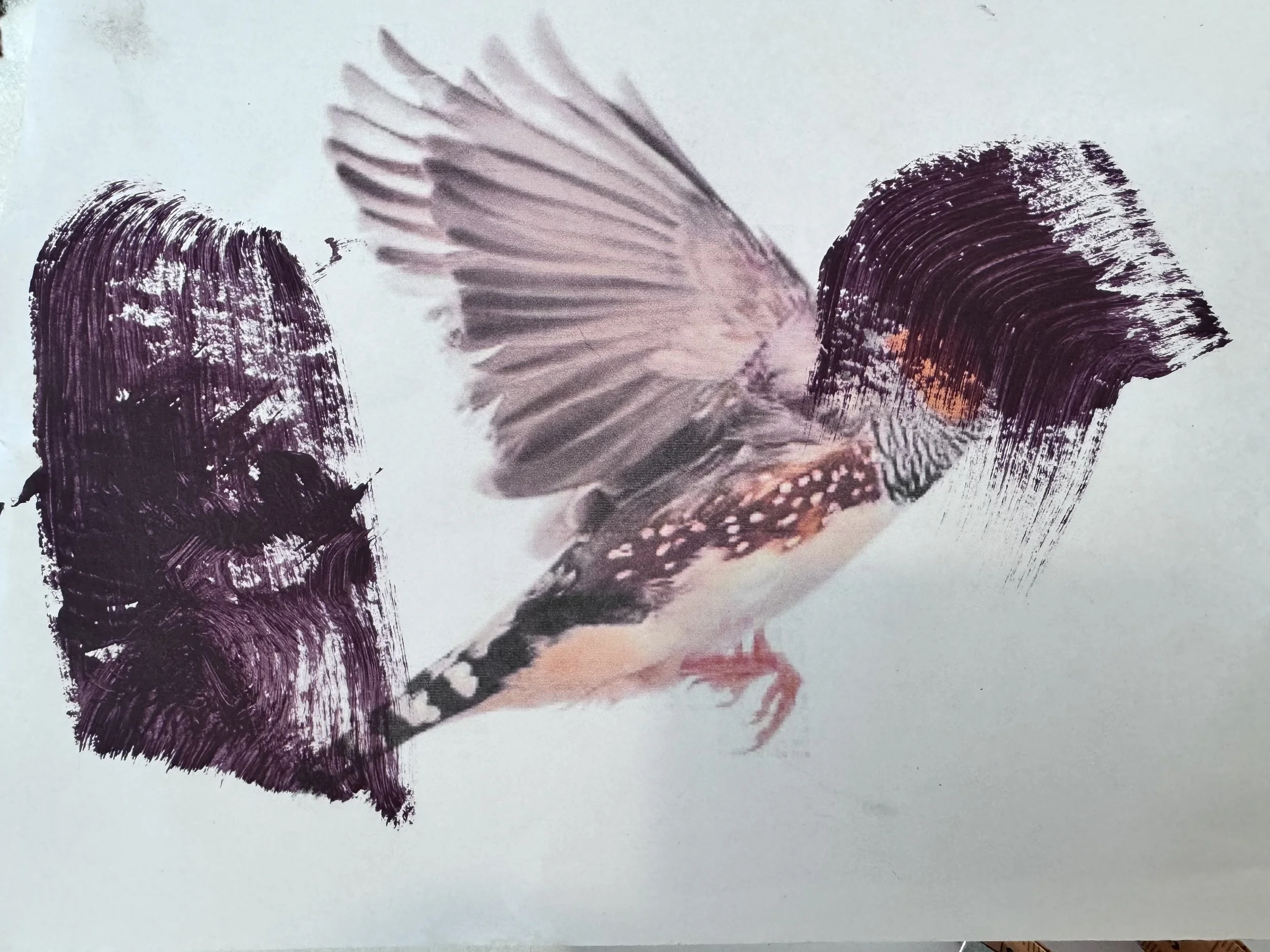
ZEBRA FINCHES have been studied at Fowlers Gap Research station by behavioural ecologist Professor Simon Griffith. Griffith adds that the singing helps to enhance social cohesion – and also allows flocks to synchronise their breeding to suit local conditions, which can vary over the long breeding season in an arid climate. The researchers found that the birds continued to sing even during times of drought, suggesting that singing is not just related to breeding and choosing mates. Song analysis also found that multiple males will sing from the same location and at the same time, indicating a social aspect to the singing. The researchers also conducted playback experiments to test how the birds respond to song, and found the birds were more likely to approach the recording site or to sing in response to the sound of other zebra finches, compared to a control playback of nightingale song. Griffith says that by following birds and their songs in their natural habitat, this research shows that the birdsong has important functions beyond territoriality and mate choice, and plays a role in coordinating and strengthening social cohesion. (Zebra Finches are social singers, new research finds, Professor Simon Griffith)
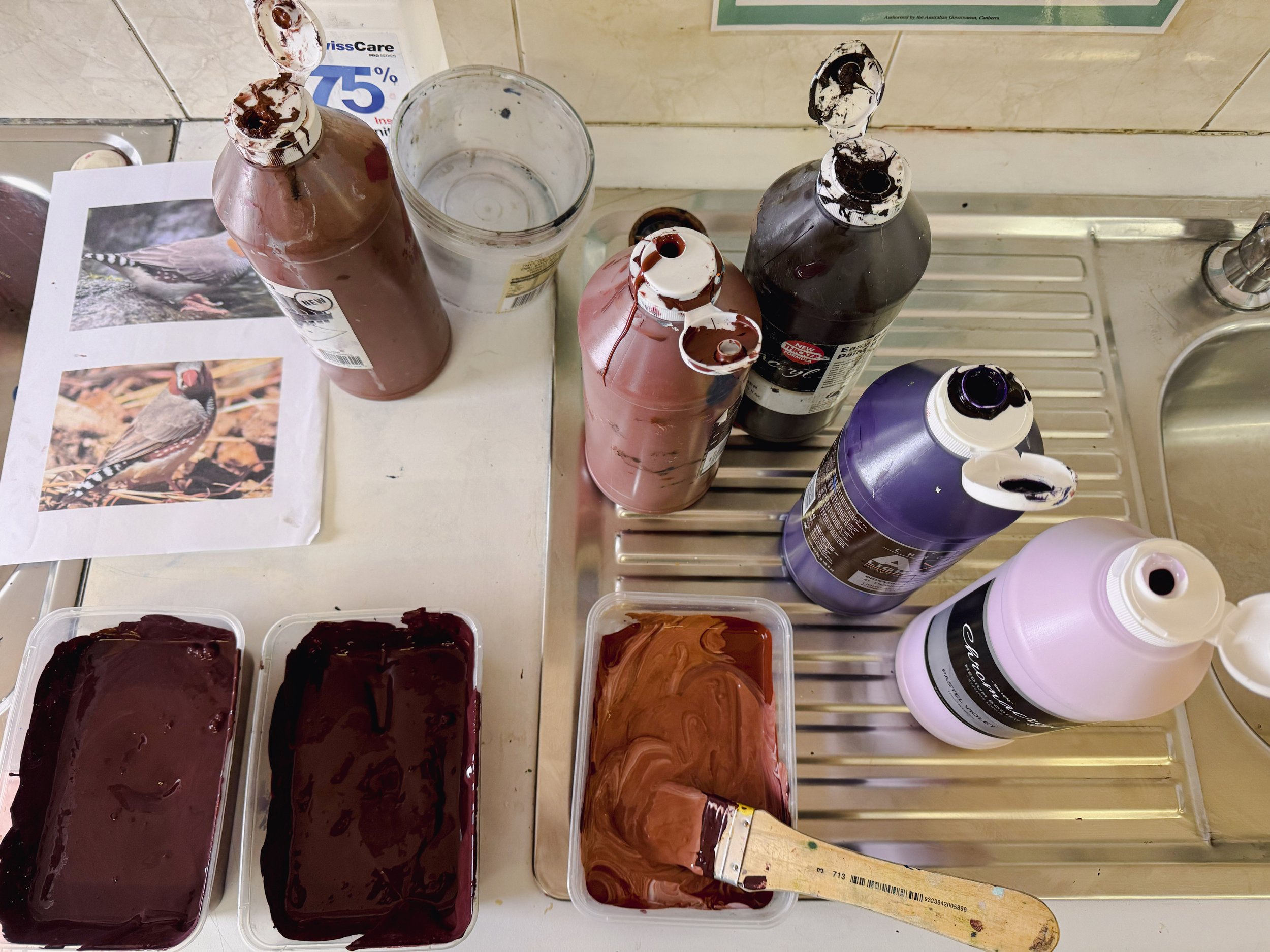
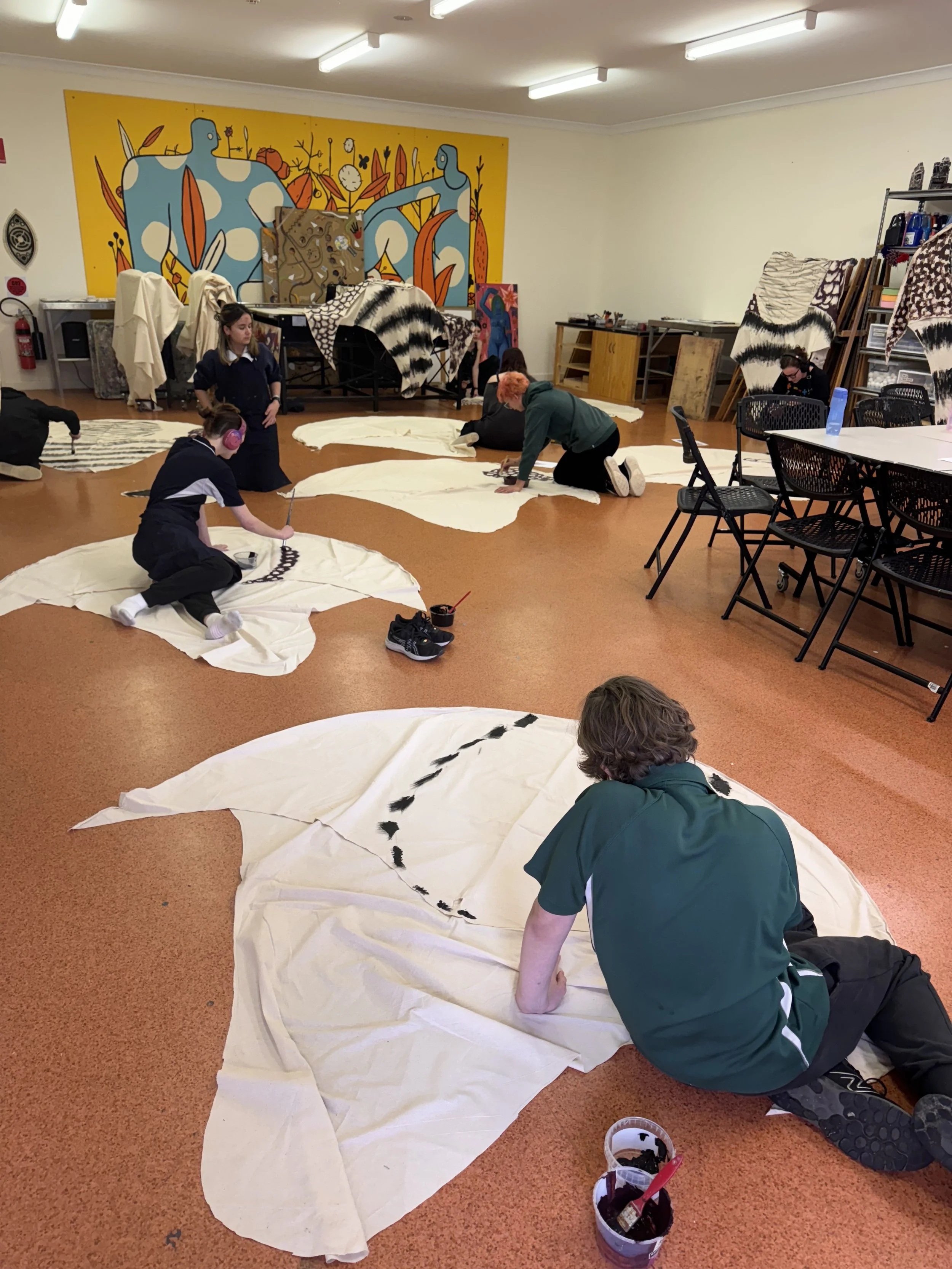
repurposed calico, high vis shirts, hand machete/d bamboo dowel, studio acrylic paint
made in collaboration with:
AACES GROUP: Antoinette Deacon, Vicki Adams, Tarleighan Williams, Darlene Newman, Eileen Newman, D’Shama Newman, Sissy Power, Shamii Chaplain, Skey Fry, Racheal George, Imogen Gray, Rakell Webster, Tyeshia Williams, Dakota Staker, Lilly Wren
Arts/COOL GROUP Shayla Brown, Liam Mclaughlin, Emma Mclaughlin, Elijah Forster, Nat Kloczko, Leon Brown, Hannah Beitzel, Emily Jones, Max BurrowsAACES GROUP: Antoinette Deacon, Vicki Adams, Tarleighan Williams, Darlene Newman, Eileen Newman, D’Shama Newman, Sissy Power, Shamii Chaplain, Skey Fry, Racheal George, Imogen Gray, Rakell Webster, Tyeshia Williams, Dakota Staker, Lilly Wren
Arts/COOL GROUP Shayla Brown, Liam Mclaughlin, Emma Mclaughlin, Elijah Forster, Nat Kloczko, Leon Brown, Hannah Beitzel, Emily Jones, Max Burrows
The project was created using experimental processes, from drones to phone footage, sonic field recordings, cumbia to collective body percussion; making in ensemble, recording live instrumentation and vocals to electronic sampling. Seeding relationships, fruiting ideas of collaboration and symbiosis, as vulnerable spaces that rely on thresholds of curiosity, trust, generosity, exploration, intuition, adaptability and embodied knowledge; allowing emergent phenomena to awaken and ferment.
Asking: what are the fertile conditions that allow for creation/life to flourish?
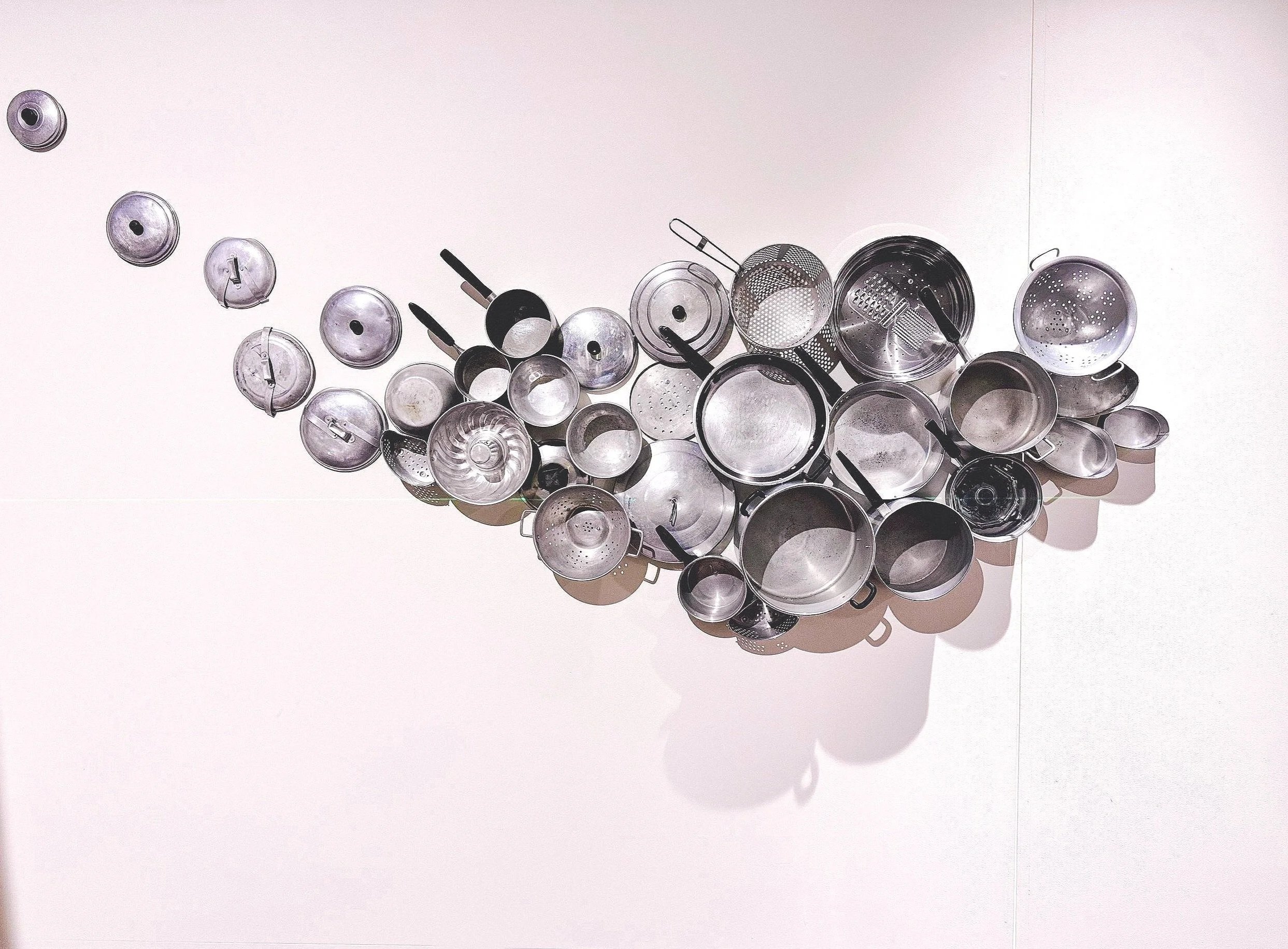
Broken Hill found aluminium pot lids, kitchenware
Broken Hill found aluminium pot lids, kitchenware
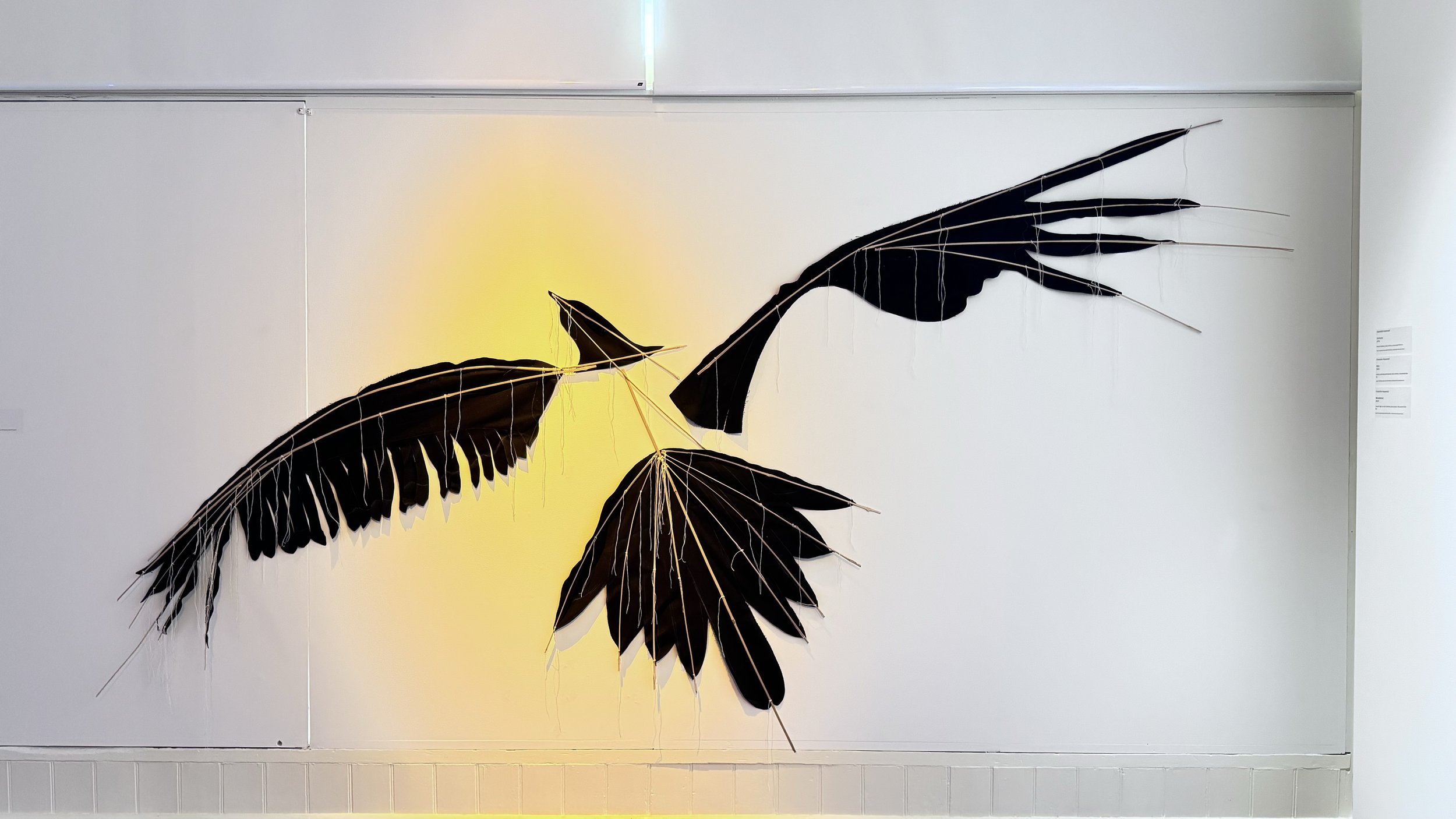
hemp canvas, machete bamboo dowel
+ coinciding sonic track
hemp canvas, machete bamboo dowel
Charlotte Haywood, Sue Simpson, Aimee Volkofsky, Hamish McCormick
23:07 minutes single channel 4k video with operatic score:
Dormancy
Rain
Grass Seed dispersing Ants
Zebra Finches
Willie Wagtails
Billy Goat
Magpies
Wedge-Tailed Eagle
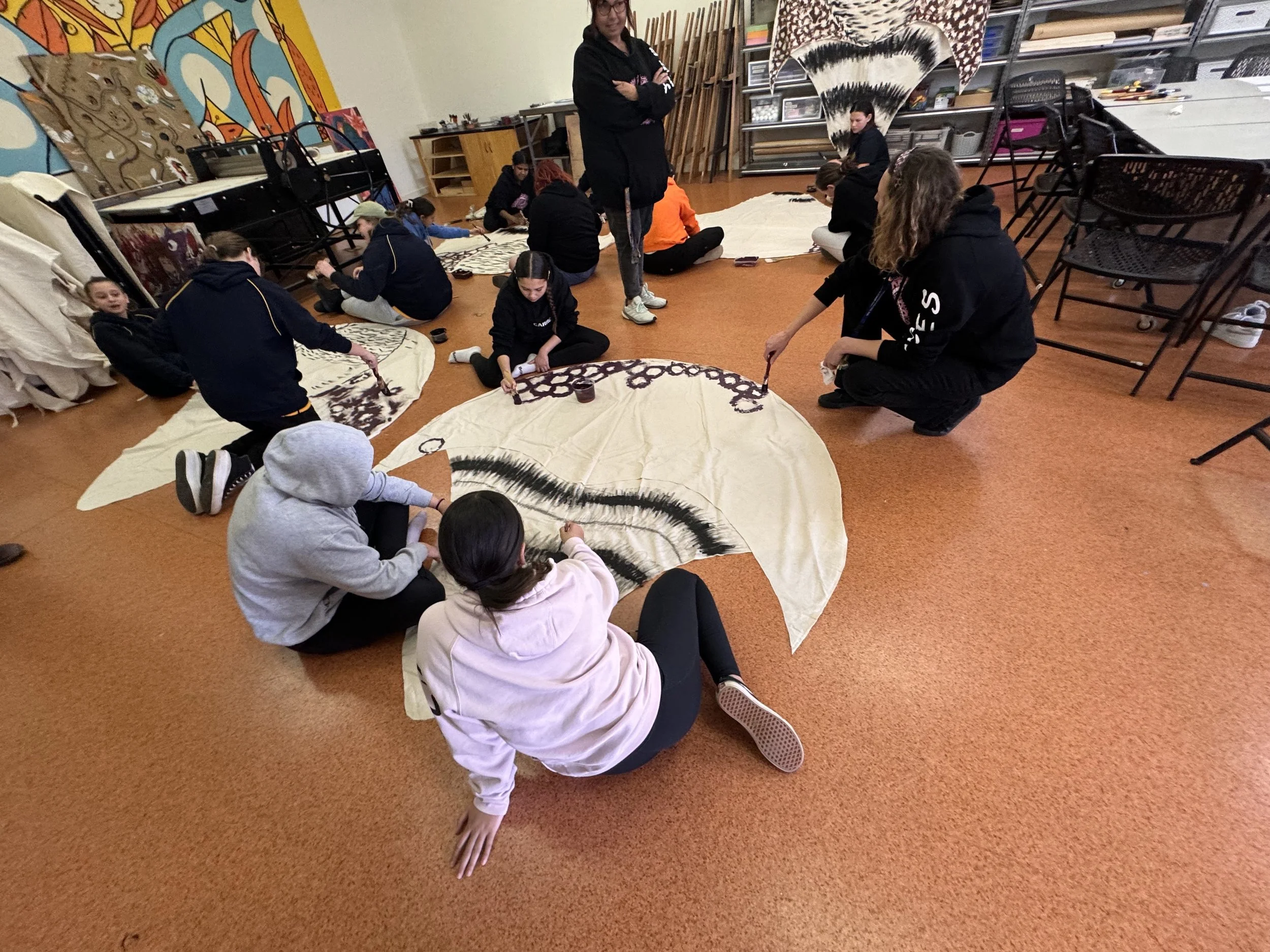
Textiles, colour/mark making + Sculpture
with AACES Group
Aboriginal Art + Community Education Sistas (Broken Hill High School) Antoinette Deacon, Vicki Adams, Tarleighan Williams, Darlene Newman, Eileen Newman, D’Shama Newman, Sissy Power, Shamii Chaplain, Skey Fry, Racheal George, Imogen Gray, Rakell Webster, Tyeshia Williams, Dakota Staker, Lilly Wren
AACES Group: Aboriginal Art + Community Education Sistas (Broken Hill High School)
Antoinette Deacon, Vicki Adams, Tarleighan Williams, Darlene Newman, Eileen Newman, D’Shama Newman, Sissy Power, Shamii Chaplain, Skey Fry, Racheal George, Imogen Gray, Rakell Webster, Tyeshia Williams, Dakota Staker, Lilly Wren
Arts/COOL GROUP:
Shayla Brown, Liam Mclaughlin, Emma Mclaughlin, Elijah Forster, Nat Kloczko, Leon Brown, Hannah Beitzel, Emily Jones, Max Burrows
Textiles + Costume elements with AACES Group
Aboriginal Art + Community Education Sistas (Broken Hill High School) Antoinette Deacon, Vicki Adams, Tarleighan Williams, Darlene Newman, Eileen Newman, D’Shama Newman, Sissy Power, Shamii Chaplain, Skey Fry, Racheal George, Imogen Gray, Rakell Webster, Tyeshia Williams, Dakota Staker, Lilly Wren
with AACES Group
Aboriginal Art + Community Education Sistas (Broken Hill High School) Antoinette Deacon, Vicki Adams, Tarleighan Williams, Darlene Newman, Eileen Newman, D’Shama Newman, Sissy Power, Shamii Chaplain, Skey Fry, Racheal George, Imogen Gray, Rakell Webster, Tyeshia Williams, Dakota Staker, Lilly Wren
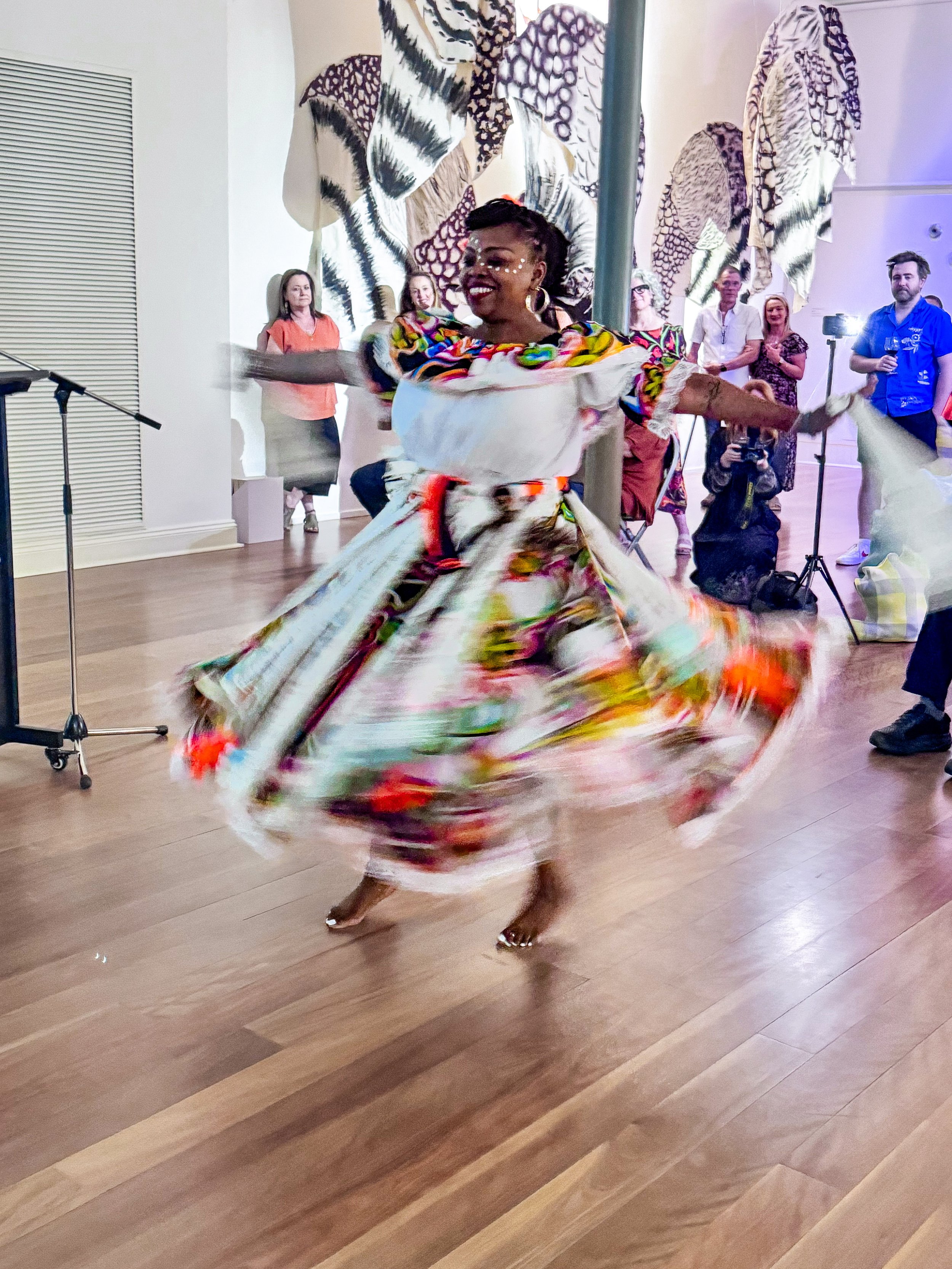
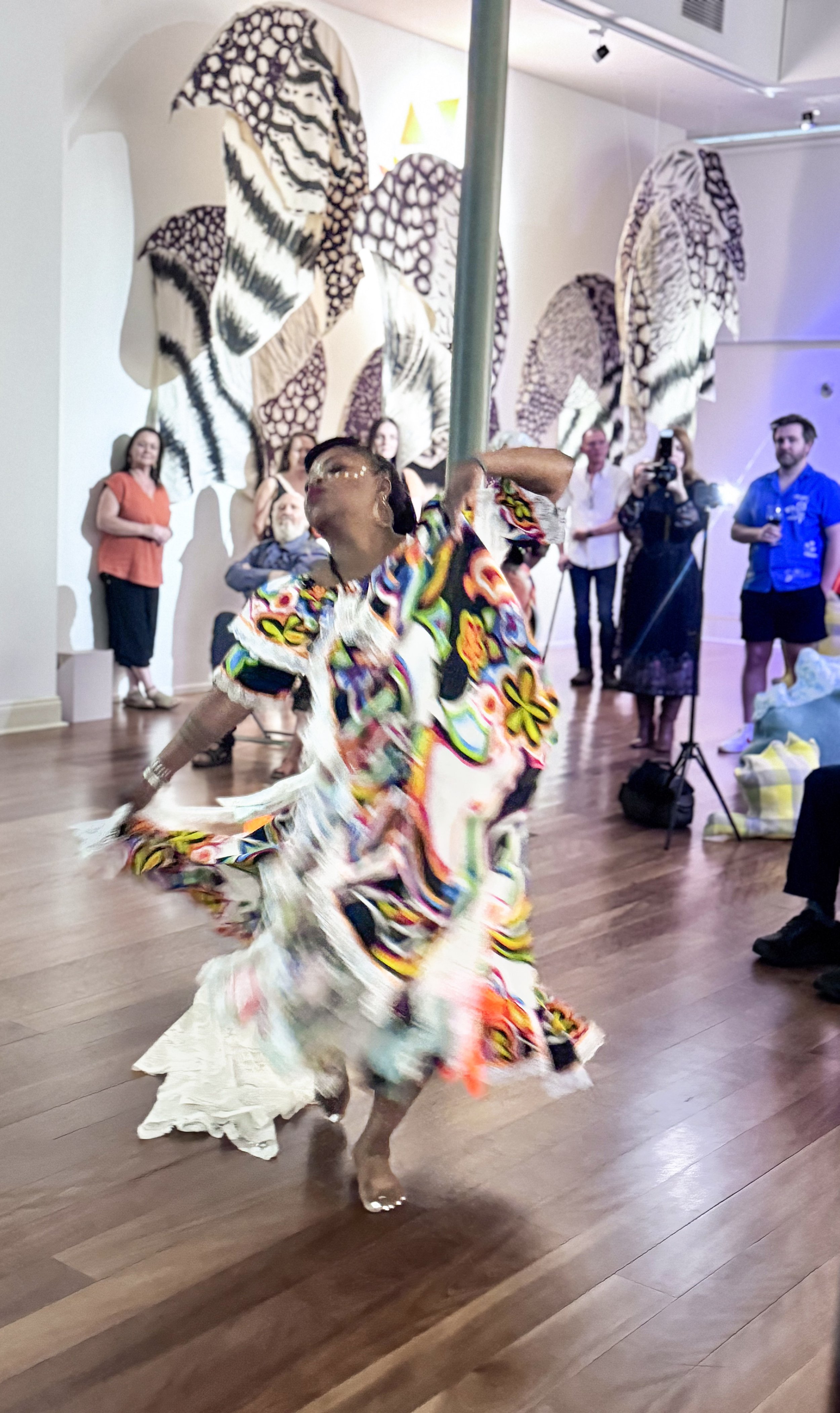
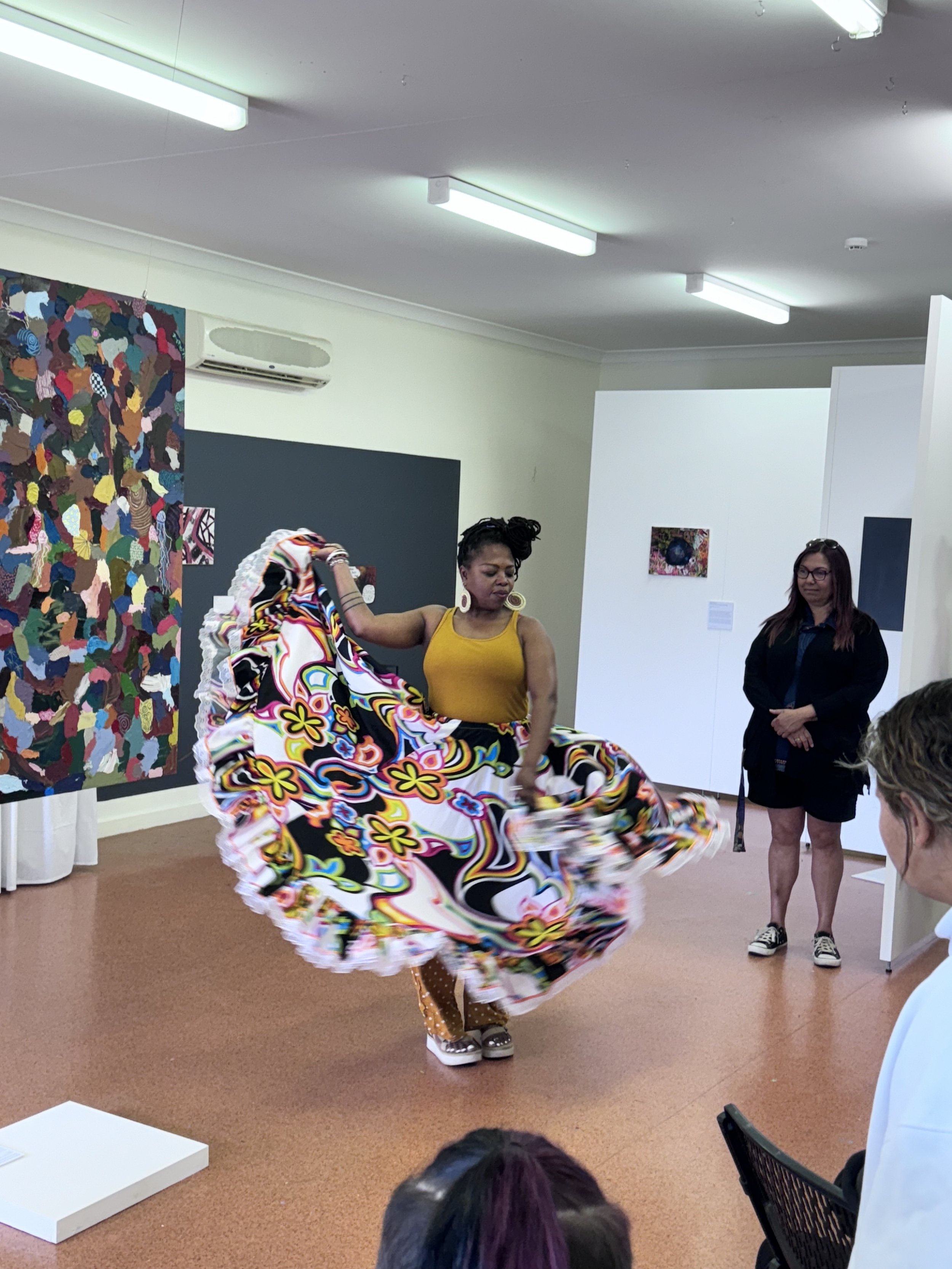
with Claudia Vidal Aguilar and the AACES Group
Aboriginal Art + Community Education Sistas (Broken Hill High School) Antoinette Deacon, Vicki Adams, Tarleighan Williams, Darlene Newman, Eileen Newman, D’Shama Newman, Sissy Power, Shamii Chaplain, Skey Fry, Racheal George, Imogen Gray, Rakell Webster, Tyeshia Williams, Dakota Staker, Lilly Wren.
Cumbia rises from the meeting of worlds shaped by Spanish colonisation and the forced arrival of African slaves. Emerging from Afro-Colombian funeral traditions and shaped by the rhythms of costeño life, it carries the memory of resistance, migration, and celebration. Spanish folk melodies mingled with Indigenous songlines; African pulse gave it breath and fire. Today, cumbia moves between street and ceremony, a living fusion of cultures that shaped it.
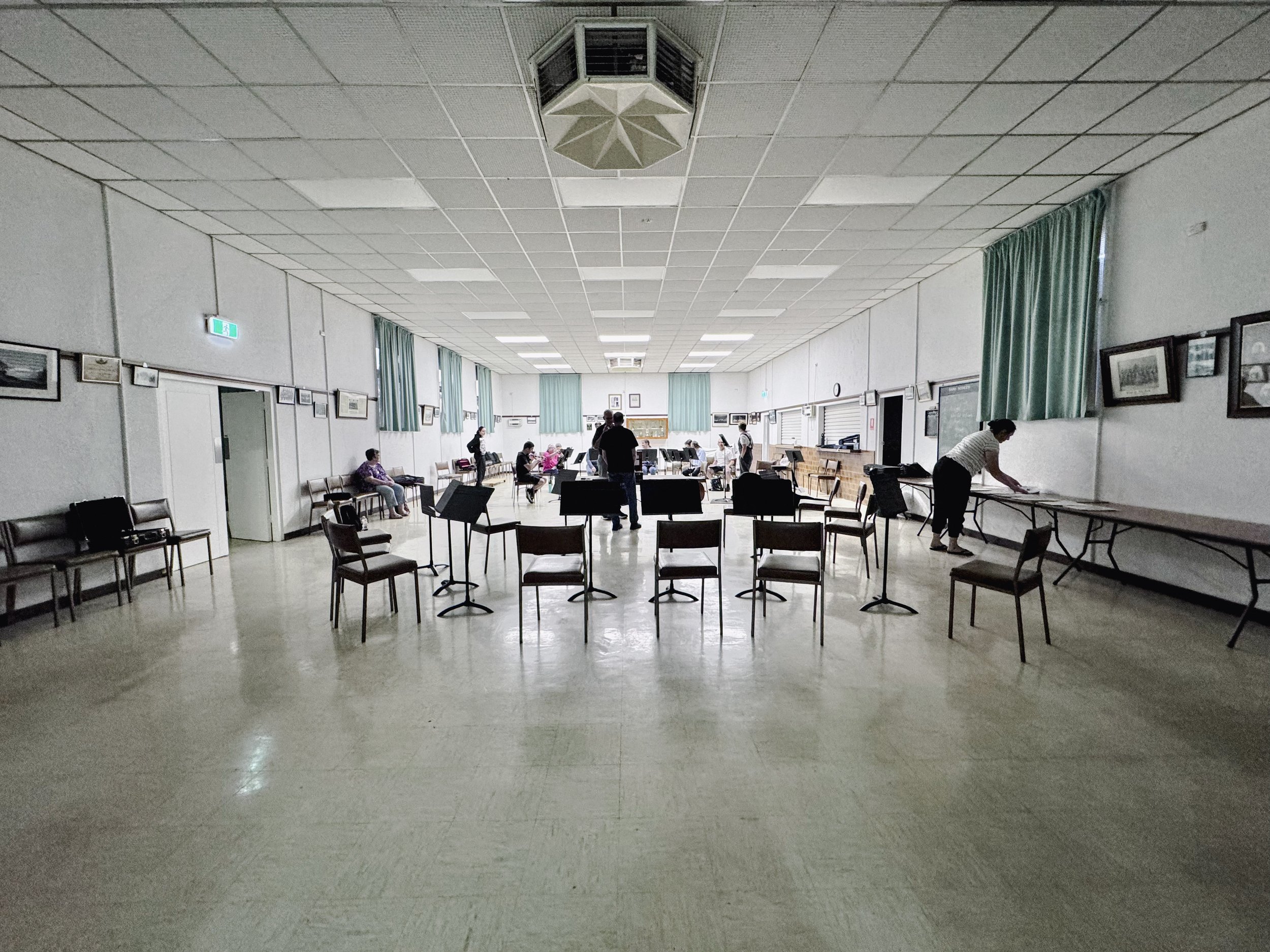
with musician/composer Sue Simpson and conductor Mark Curtis from Broken Hill Civic Orchestra
Broken Hill Civic Orchestra
Barrier Union Brass Band
with Aimee Volkofsky
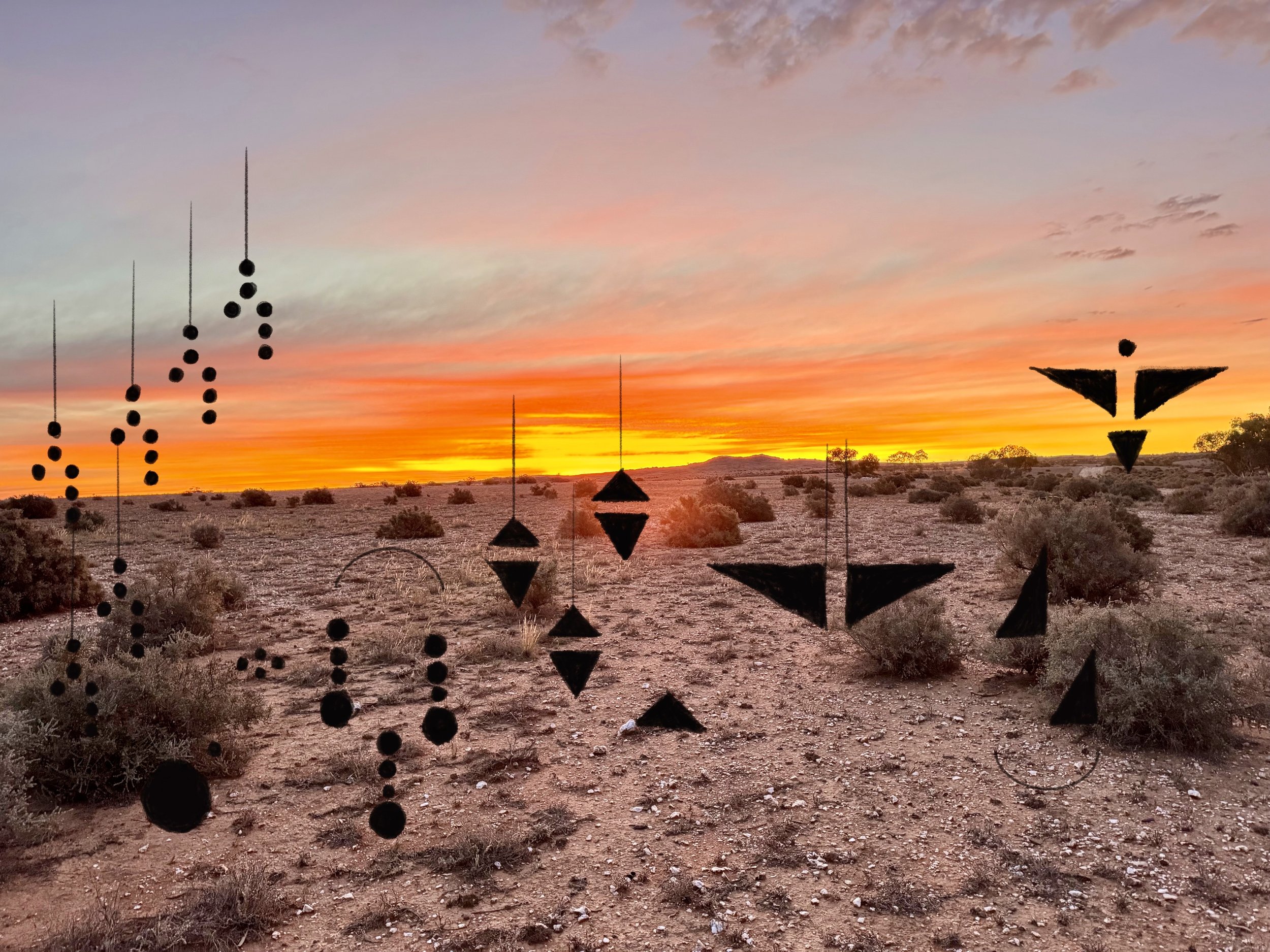
Broken Hill inspiration
material language
Opening Night
Same time/Same place playfully explores the idea of a multispecies ephemeral opera set on Wilyakali and Barkandji Country in the arid zone of far west NSW; a resilient and adaptive ecology that experiences dramatic changes from dormancy to abundance. Triggered by the phenomenon of rain, the seemingly sparse landscape can burst into life with shimmering crescendos of colour and movement - of wildflowers and flocking birds.
Creeks spontaneously flow, synchronising frogs to wake from aestivation (dormancy). In this multispecies chorus, duets and intertwining arias emerge, signifying the cycles and interconnection of life. Bringing together human and non-human voices as if place itself conducts the opera.